Dream Destination: Busan, South Korea — When You Need Seoul’s Energy with Ocean Air and Fewer Apologies
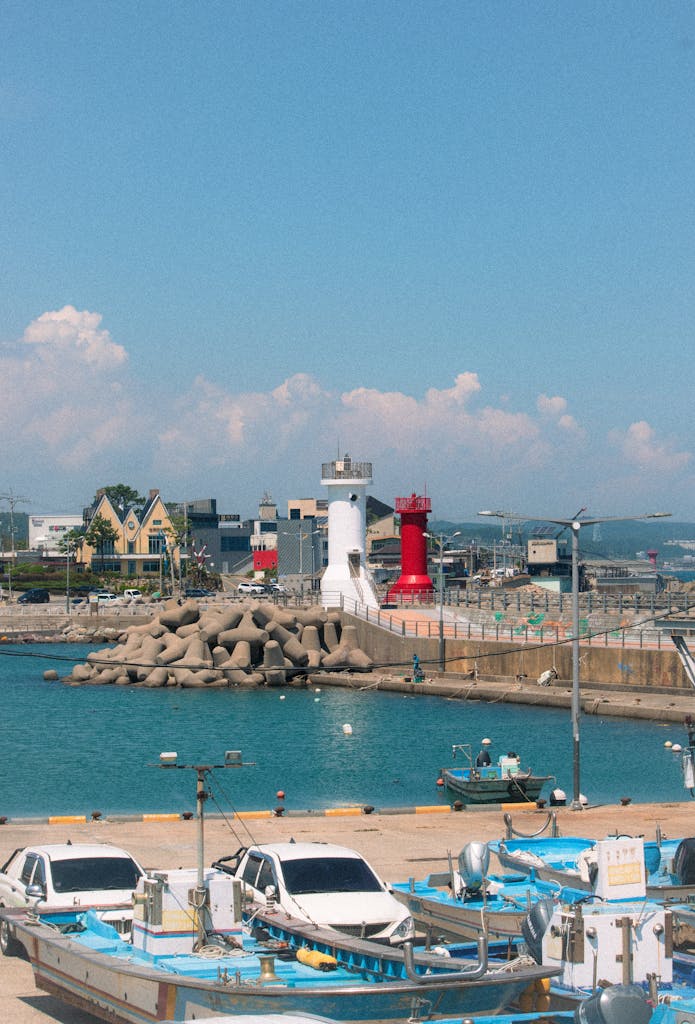
Photo by Junsu Park @pexelsphoto
Busan South Korea tour is what happens when you take Seoul’s efficiency, strip away half the stress, add beaches and mountains and seafood so fresh it’s still moving on your plate, and give it all a coastal attitude that says: relax, we’ve got this.
- This dream destination is Korea’s second city—3.5 million people, Korea’s largest port, a sprawl of neighborhoods climbing hills and hugging coastline where the East Sea (Sea of Japan) meets the Korean Strait.
- Busan doesn’t compete with Seoul. It doesn’t need to.
- Seoul is the capital, the power center, the place where everyone’s rushing toward something. Busan is where people go when they remember that the ocean exists, that seafood tastes better when you can see the boats, that sometimes a city can move fast and breathe deep at the same time.
- You arrive by KTX bullet train from Seoul—2.5 hours through the Korean countryside, tunnels blasting through mountains, rice fields giving way to coastal plains. You step off at Busan Station and immediately feel the difference:
- The air is saltier. The pace is looser. The accents are thicker (Busan satoori—the local dialect—is famous for sounding tougher, more direct). People here don’t apologize for taking up space.
- This is a working city that happens to be beautiful—not a beautiful city pretending to work.
- You’ve got Haeundae Beach—Korea’s most famous beach, high-rises lining white sand, summer crowds that turn the waterfront into a festival. You’ve got Gamcheon Culture Village—hillside neighborhood painted in pastels, nicknamed “Korea’s Santorini” (tourist-heavy but genuinely charming). You’ve got Jagalchi Fish Market—Korea’s largest seafood market, where ajummas (aunties) sell octopus, sea squirts, hagfish, and things you can’t identify but will eat anyway.
- You’ve got mountains you can hike before breakfast. Beaches you can swim at after dinner. Temples built into cliffs. Hot springs. Night markets. A film festival that rivals Cannes in prestige if not glamour.
Busan, South Korea is the city Seoul natives vacation in when they need to remember that ambition isn’t the only way to live.
And for travelers? It’s Korea without the overwhelm—accessible, affordable, beautiful, real.
⚠️ Essentials for Tourist: As of January 1, 2026, South Korea has replaced paper arrival forms with a mandatory e-Arrival Card. It must be completed at e-arrivalcard.go.kr within 72 hours of your flight.
For the ones who feel the pull – this Busan South Korea tour is your RESET
If you need world-class nightlife or luxury shopping, Seoul wins.
If you need ocean air, mountain hikes, seafood binges, and a city that lets you breathe between adventures—Busan is the answer you didn’t know you needed.
This dream destination was built for:
- Travelers who want Korean culture without Seoul’s intensity
- Beach lovers who didn’t know Korea had beaches worth visiting
- Seafood obsessives ready for markets where everything was swimming this morning
- Hikers who want coastal trails and mountain temples with ocean views
- Solo travelers who need a city safe, walkable, and easier to navigate than Seoul
- K-drama fans (yes, Busan shows up constantly—Reply 1997, Ode to My Father, Train to Busan)
- Anyone who wants to see what a Korean city looks like when it’s built around geography, not just ambition
When the world finally exhales, what it feels like
Neighborhood by Neighborhood – Busan Spreads Like Fingers Along the Coast
Haeundae: Beach Life, Skyscrapers, Summer Chaos
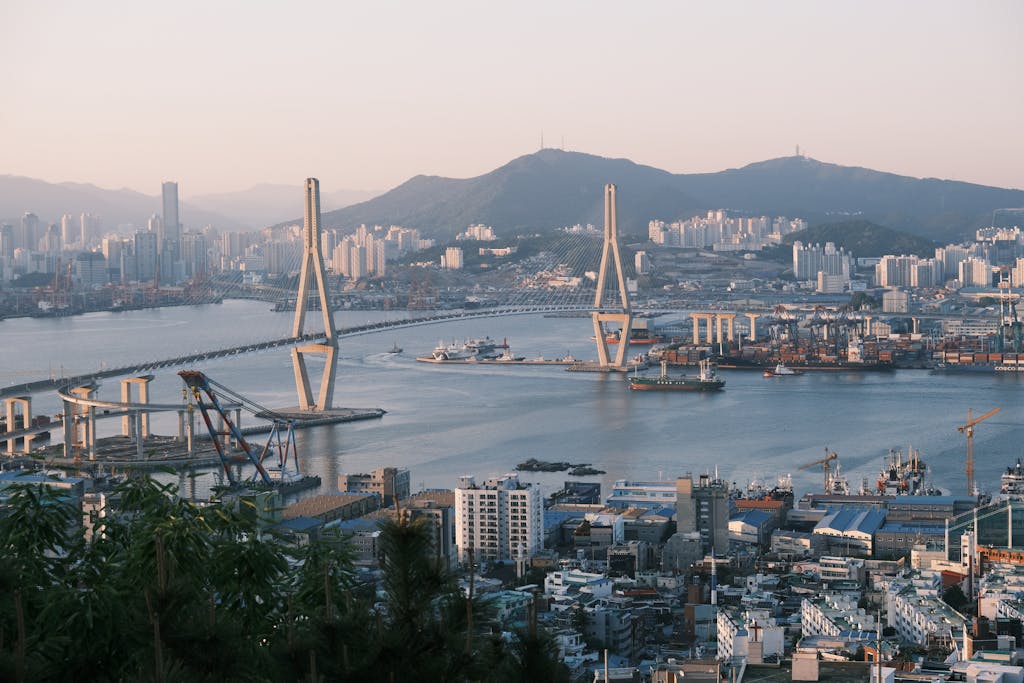
Photo by chanho choi @pexelsphoto
- Mornings start with joggers on the beach. The sand stretches 1.5 kilometers, backed by high-rises and hotels. In summer (July-August), the beach is packed—umbrellas touching, crowds so thick you can’t see sand, a festival energy that’s exhausting and exhilarating.
- Off-season (spring, fall, winter), the beach is yours. You walk the shore in solitude. You drink coffee at beachfront cafés. You understand why Koreans vacation here.
- Dongbaekseom Island (connected by walking path) wraps around the eastern edge—coastal trail, Nurimaru APEC House (where world leaders met in 2005), views of Gwangan Bridge lit up at night.
- Evenings in Haeundae are seafood and soju at tent restaurants on the beach, watching the waves, eating grilled clams and raw fish (hoe) so fresh it barely stopped moving.
Gwangalli: The View, The Vibe, The Bridge
- Just south of Haeundae, quieter, more local-feeling. The beach is smaller but the view is better: Gwangan Bridge (Diamond Bridge)—a suspension bridge lit up nightly in changing colors, stretching 7.4 kilometers across the bay.
- You sit at a beachside café or chicken-and-beer spot (chimaek), order fried chicken and Cass beer, and watch the bridge glow against the dark water. Couples sit on the sand. Street musicians play. The city feels gentle here.
Gamcheon Culture Village: Painted Hills, Instagram Bait, Actual Charm
- A hillside shantytown turned art project. After the Korean War, refugees settled here. Decades later, artists transformed it—murals, sculptures, painted staircases, cafés tucked into alleyways.
- Yes, it’s touristy. Yes, everyone’s taking the same photos (Little Prince statue looking over the rooftops). But if you go early (before 10 AM) or late (after 4 PM), you catch moments of quiet—old women sitting outside homes, kids walking steep stairs from school, laundry drying on balconies.
- It’s gentrification with a Korean twist—preserved, monetized, but still lived-in.
Jagalchi Fish Market: Seafood Cathedral, Working Market, Controlled Chaos
- Korea’s largest seafood market. Ground floor: tanks of live fish, octopus, crab, sea urchin, eel, shellfish you’ve never seen. Ajummas in rubber boots yell prices, gut fish with alarming speed, negotiate in Busan satoori that sounds like arguing even when it’s not.
- You pick your seafood downstairs (point and gesture if you don’t speak Korean), take it upstairs to a restaurant that cooks it however you want—grilled, steamed, raw (hoe), in spicy stew (maeuntang).
- You eat sea squirt (meongge)—looks like a rock, tastes like the ocean had an opinion. You eat raw fish so fresh it’s still twitching. You drink soju. You understand why Koreans are obsessed with seafood.
Seomyeon: Busan’s Downtown, Shopping, Nightlife, Youth Energy
- Inland, no beach, but this is where young Busan goes. Shopping streets (Seomyeon Underground Shopping Center), nightlife, cafés, restaurants, noraebang (karaoke), bars.
- Less polished than Seoul’s Hongdae, more authentic. You eat dwaeji gukbap (pork rice soup—Busan’s signature dish) at 24-hour joints. You wander into basement bars. You sing badly with locals who appreciate the effort.
Yeongdo Island: Old Busan, Harbor Views, Locals Only
- Connected by bridge, often skipped by tourists—which is exactly why you should go. Huinnyeoul Culture Village clings to cliffs above the harbor—pastel houses, narrow alleys, ocean views, a coastal trail that feels like discovery.
- Taejongdae Park—forested coastal cliffs, lighthouse, observatory, walking trails where the only crowds are Korean families on weekend picnics.
- This is Busan before tourism, before gentrification—just a port city living its life.
The Busan Experience: What You Actually Do Here
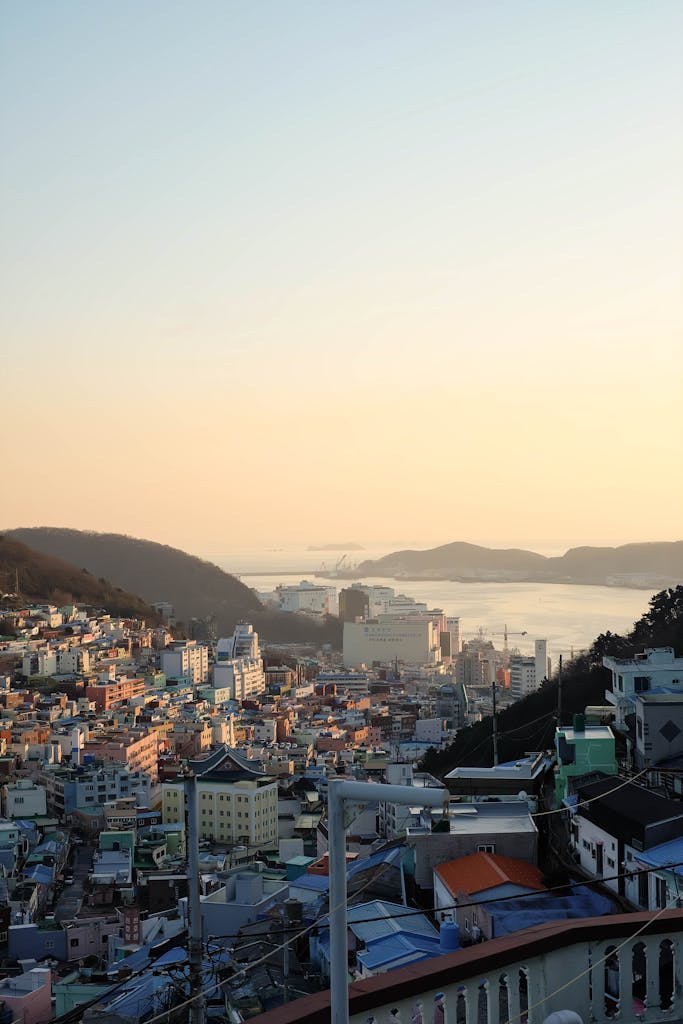
Photo by Margarita K @pexelsphoto
BEACHES:
- Haeundae—famous, crowded in summer, beautiful year-round
- Gwangalli—bridge views, more local, better for evening hangs
- Songdo Beach—Korea’s first public beach (1913), cable car (Songdo Beach Cable Car) over the water, retro charm
- Dadaepo Beach—west side, sunsets, fewer tourists, locals swimming
TEMPLES:
- Haedong Yonggungsa—seaside temple, waves crashing against rocks, sunrise visits, one of Korea’s most photogenic temples
- Beomeosa Temple—mountain temple (slopes of Geumjeongsan), 1,300 years old, hiking trails, autumn colors
HIKING:
- Geumjeongsan—Busan’s main mountain, Geumjeong Fortress ruins, hiking trails, city views
- Igidae Coastal Trail—clifftop walking path, ocean views, minimal effort, maximum reward
- Jangsan Mountain—quick hike, panoramic views over Haeundae and ocean
FOOD:
- Dwaeji gukbap (pork rice soup)—Busan’s soul food, cheap, filling, everywhere
- Milmyeon (cold wheat noodles)—Busan’s answer to Pyongyang naengmyeon
- Raw fish (hoe) at Jagalchi or Mipo—so fresh it redefines sashimi
- Ssiat hotteok (seed-stuffed sweet pancakes)—BIFF Square, crispy, sweet, addictive
- Eomuk (fish cake)—Busan invented it, street stalls serve it hot in broth
CULTURE:
- Busan International Film Festival (BIFF)—October, Asia’s largest film festival
- BIFF Square—year-round street food, cinema history, handprints of Korean film stars
- Gamcheon Culture Village—art, murals, cafés, Instagram content
- Trick Eye Museum—3D art, interactive, cheesy fun
NIGHTLIFE:
- Gwangalli Beach—chicken and beer, bridge views, live music
- Seomyeon—clubs, bars, karaoke, college energy
- Haeundae—beachfront bars, more touristy, still fun
The quite reasons you’ll find your way back
This dream destination rewards slow exploration. First-timers hit Haeundae, Gamcheon, Jagalchi—the highlights. Second-timers discover Yeongdo, Oryukdo Skywalk, neighborhood temples. Third-timers have favorite dwaeji gukbap spots, know which hiking trails are empty at dawn, understand that Busan isn’t trying to be Seoul—it’s being Busan, and that’s enough.
Because Busan, South Korea is:
- Seoul without the pressure—same efficiency, half the stress
- Beach life Koreans actually use—not a resort, a real city with coastline
- Seafood paradise—if you eat fish, Busan is bucket-list
- Geographically stunning—mountains meet ocean, temples on cliffs, bridges lit at night
- Authentically Korean—fewer English signs, thicker accents, more local flavor
- A city that exhales—Seoul inhales ambition, Busan exhales relief
Busan becomes less a checklist and more a rhythm—wake, hike, beach, eat, repeat.
What this place whispers to your heart – the emotional promise
You’ll watch sunrise at Haedong Yonggungsa Temple with waves crashing below. You’ll eat raw octopus at Jagalchi and feel it suction-cup your tongue. You’ll sit on Gwangalli Beach at night watching the bridge glow and realize you’ve been holding your breath for months—and this city just taught you how to exhale.
Busan won’t solve your problems. But it’ll show you what a city looks like when it refuses to choose between productivity and pleasure, between ambition and ocean air.
It just holds both—and lets you pick your own balance.
This is the kind of place you bring:
- Your Seoul exhaustion when you need Korea’s energy with ocean therapy
- Your appetite when you’re ready for seafood that redefines “fresh”
- Your hiking boots when you want mountains and coastline in the same day
- Your summer energy when you need beaches that actually feel Korean, not resort-generic
- Yourself when you need a city that works hard but knows when to stop
What follows you home – after you leave
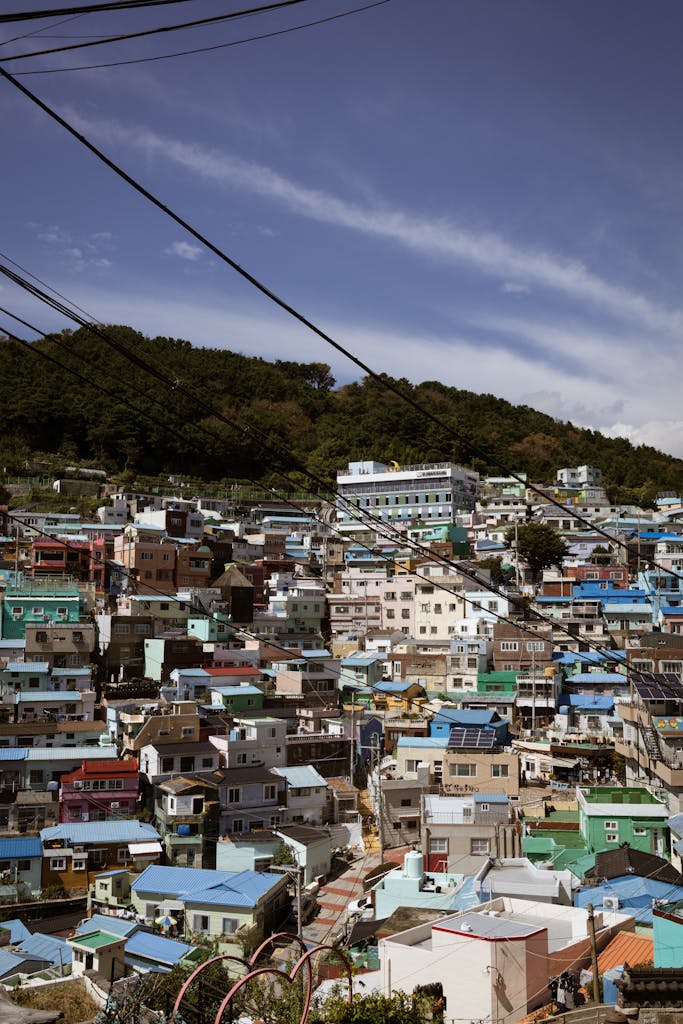
Photo by Evija Ciematniece @pexelsphoto
- You’ll take the KTX back to Seoul, and the contrast will hit immediately. Seoul rushes. Busan breathed.
- You’ll remember: what fresh octopus tastes like. What Gwangan Bridge looked like at night. What it felt like to hike Geumjeongsan at dawn and see the city wake up below you.
- Some people leave Busan and immediately start planning the return trip—maybe in summer for beaches, maybe in fall for hiking. Some people leave and realize they needed the coast to appreciate the capital again. Some people leave and start researching other Korean coastal cities—Sokcho, Gangneung, Yeosu—because now they know Korea has edges, not just centers.
All three are valid.
What matters is this: Busan showed you that Korean cities don’t have to be Seoul. They can be coastal, slower, seafood-obsessed, mountain-backed, and still completely, authentically Korean.
And once you’ve tasted that version—you can’t unsee it.
How long you can linger, and what it really cost
⌛Time:
- 2D1N minimum—beaches, market, temple, seafood, rushed but doable
- 3D2N ideal—multiple beaches, hiking, neighborhoods, proper food exploration
- 4D3N+—day trip to Gyeongju (ancient capital, UNESCO sites), deeper Busan, recovery time
💸Budget Range:
- Budget trip: $300–$550 USD per person (3 days)
- KTX from Seoul (₩60,000/$45), hostel/guesthouse (₩25,000–45,000/$19–34/night), street food and local restaurants, subway/bus only, free beaches and temples, markets, DIY exploring
- Comfortable trip: $650–$1,100 USD per person
- KTX, 3-star hotel near Haeundae (₩80,000–130,000/$60–100/night), seafood splurges at Jagalchi, taxis when tired, jjimjilbang (spa), cable car, temple taxi, shopping buffer, chimaek sessions
- “Busan luxury” tier: $1,400–$2,500+ USD
- KTX first class, beachfront hotel (₩200,000–400,000/$150–300/night), fine dining and sushi omakase, private driver, guided tours, yacht cruise, rooftop bars, spa day, zero budget stress
🧳Busan is cheaper than Seoul—hotels cost less, food is comparable or cheaper, and many of the best experiences (beaches, hiking, coastal walks) are free.
🍹If Busan feels like the Korea you’ve been missing, your next chapter might be⤵️
The Dream Map Travel Destinations grows one story at a time.
It’s a collection of lived moments—routes taken on a whim, places that surprised you, detours that turned into stories worth keeping.
Every Dream Map travel destinations exists because someone went first.
If you’ve been there—
reached a place you didn’t expect to love
discovered a route that felt smoother than advertised
stayed longer than planned because the place earned it.
share it below.
Your experience doesn’t have to be perfect. It just has to be real.
What you add helps future travelers imagine better, plan smarter, and arrive with context instead of fantasy.
Dream Map travel destinations grows one story at a time—quietly, collectively, and with intention
This page evolves with shared experiences. Verified patterns are folded back into the map over time.
MappedAtlas improves with commuter reports. If you find outdated routes, changed timetables, or new paths, send a quick update.
Last updated: March 2026