Dream Destination: Seoul, South Korea — When You Need a City That Moves at Your Speed, Whatever That Is
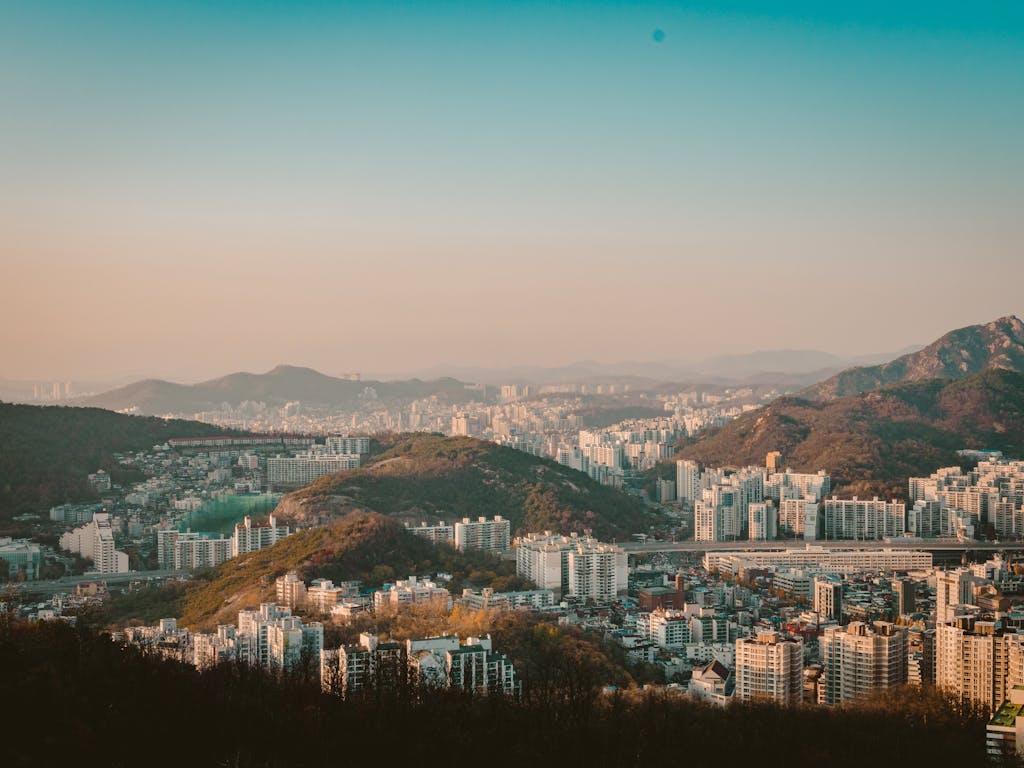
Photo by Marius Mann @pexelsphoto
Seoul South Korea tour is what happens when ancient temples meet K-pop billboards, when street food carts sit next to Michelin-starred restaurants, when 5,000 years of history collides with technology so advanced it makes other “smart cities” look quaint.
- This dream destination is a city of 10 million people that somehow holds contradictions without breaking: Buddhist monks walking past neon-lit nightclubs, CEOs eating at plastic tables in alleyways, grandmothers selling kimchi next to teens filming TikToks in Gangnam.
Seoul doesn’t ask you to choose one version of it. It offers all of them simultaneously—and lets you build your own path through the chaos. - You arrive at Incheon International Airport (consistently ranked among the world’s best), take the express train that deposits you downtown in 45 minutes, step out into Myeongdong or Hongdae or Gangnam, and immediately face sensory overload:
- Korean BBQ smoke. K-beauty store lights. Street musicians. Subway announcements. The smell of tteokbokki (spicy rice cakes) mixing with coffee from the 47th café on a single block. Neon signs in Hangul you can’t read but somehow understand mean food, shopping, nightlife.
This city moves fast. - But here’s the thing most people miss: Seoul also knows how to be slow.
Quiet temple gardens in Bukchon Hanok Village. Dawn hikes up Bukhansan where the city spreads below you like a circuit board. Late-night jjimjilbang (Korean spa) sessions where you sweat in silence for three hours then sleep on heated floors. Seochon alleyways where time moves at grandparent pace.
Seoul, South Korea isn’t one city. It’s twenty cities layered on top of each other—and which one you experience depends entirely on what you need.
Party city. Food city. Shopping city. History city. Tech city. Nature city. Healing city. Chaos city.
All of them true. All of them available. All of them operating at full capacity, right now, tonight.
You don’t visit Seoul. You tune into whatever frequency you need—and the city meets you there.
⚠️ Essentials for Tourist: As of January 1, 2026, South Korea has replaced paper arrival forms with a mandatory e-Arrival Card. It must be completed at e-arrivalcard.go.kr within 72 hours of your flight.
For the ones who feel the pull – this Seoul South Korea tour is your CELEBRATION
If you need beaches or tropical weather, Seoul will disappoint you.
If you need a city that can be whatever you need it to be—efficient or chaotic, modern or traditional, social or solitary, cheap or luxury—Seoul will exceed every expectation you didn’t know to have.
This dream destination was built for:
- First-time Asia travelers who want modern infrastructure with cultural depth
- K-pop and K-drama fans ready to see the sets, neighborhoods, and culture behind the content
- Food obsessives who understand that Seoul is one of the world’s great eating cities—street food to fine dining
- Beauty and skincare lovers drowning happily in the world capital of K-beauty innovation
- Night owls who want a city that doesn’t sleep—karaoke until 6 AM, clubs, late-night markets
- Solo travelers who need a city safe enough to wander alone at 2 AM
- Digital nomads testing Asia with world-class Wi-Fi and café culture
- Anyone who’s been watching Korean content and needs to stand in the actual places
When the world finally exhales, what it feels like
Neighborhood by Neighborhood – Because Seoul Is Many Cities
Hongdae: Youth, Art, Music, Chaos
- Mornings start slow—most of Hongdae was awake until 5 AM.
- You grab coffee at a themed café (cat café, dog café, raccoon café, anything café). You walk past street art and buskers setting up.
- By afternoon, the energy builds—vintage shops, indie record stores, art supply stores where students buy materials for projects you’ll never see.
- Evenings are when Hongdae explodes: live music pouring from basement clubs, street performers drawing crowds, pojangmacha (tent bars) filling with students and artists drinking soju and eating fried chicken.
- You stumble into a noraebang (karaoke room) at midnight with strangers who became friends two hours ago. You sing terribly. No one cares.
Gangnam: Wealth, Shopping, K-Drama Gloss
- This is the Seoul of glass towers, luxury brands, and plastic surgery clinics advertising like Starbucks.
- You walk down Garosu-gil—tree-lined street with boutiques, cafés, and people who look like they’re on their way to a photoshoot (they might be).
- You eat at a Korean BBQ spot where the meat costs more than your hotel.
- You visit COEX Mall—massive underground shopping complex with an Instagram-famous library (Starfield Library) where books stack to the ceiling.
- You understand immediately why PSY sang about this neighborhood.
- It’s wealth and aspiration and pressure and beauty all compressed into real estate that costs more per square meter than most cities.
Bukchon Hanok Village: Traditional Seoul, Still Functioning
- You climb the hills between Gyeongbokgung Palace and Changdeokgung Palace and find Bukchon—a neighborhood of traditional hanok (Korean houses with curved tile roofs, wooden beams, courtyards).
- People still live here. Signs remind you: “Please be quiet. This is a residential area.”
- You walk slowly. You peek through wooden gates. You visit tea houses where you sit on floor cushions and drink yuja-cha (citron tea) while looking at a courtyard garden unchanged for 200 years.
- It’s quiet. It’s beautiful. It’s the Seoul that existed before skyscrapers.
Itaewon: Global Seoul, Expat Energy, Diversity
- Every nationality. Every cuisine. Halal food, Mexican tacos, Turkish kebabs, American burgers, Nigerian jollof rice—Itaewon is where the world moved to Seoul and set up shop.
- You walk Itaewon-ro at night and it feels like Brooklyn or East London or Berlin—international, creative, queer-friendly (Seoul’s small but vibrant LGBTQ+ scene centers here), chaotic in a warm way.
- You eat at Usadan-ro (nicknamed “Stairs Street” or “Haebangchon”)—steep alleys filled with indie cafés, bars, restaurants run by locals and expats.
Insadong & Samcheong-Dong: Art, Antiques, Culture
- Traditional meets modern meets artsy. Insadong is galleries, antique shops, tea houses, street vendors selling Korean snacks.
- Samcheong-dong is smaller, quieter—boutique cafés, art museums (MMCA Seoul), walking paths.
- You spend afternoons here when you need Seoul to slow down without leaving the city.
Myeongdong: Shopping, Tourists, Energy
- This is Seoul’s tourist heartbeat—K-beauty flagship stores (Innisfree, Etude House, The Face Shop), street food stalls, shopping chaos. It’s crowded.
- It’s loud. It’s also where you’ll spend ₩200,000 ($150) on skincare products you didn’t know you needed and won’t regret.
The Seoul Experience: What You Actually Do Here
Food:
- Korean BBQ (samgyeopsal, galbi) at a pojangmacha where you grill your own meat and the ajumma (aunt) judges your technique
- Street food: tteokbokki, hotteok (sweet pancakes), bungeoppang (fish-shaped pastry), Korean fried chicken
- Markets:Gwangjang Market for bindaetteok (mung bean pancakes) and mayak gimbap (addictive mini seaweed rolls)
- Late-night: ramyeon at a convenience store, drunk on soju, best meal of your life
Nightlife:
- Noraebang (karaoke) until 4 AM Clubs in Gangnam, Hongdae, Itaewon—techno, hip-hop, K-pop remixes
- Jjimjilbang (Korean spa)—sweat in saunas, nap on heated floors, emerge at dawn reborn
Culture:
- Gyeongbokgung Palace—changing of the guard, traditional architecture, mountain backdrop
- Bukchon Hanok Village—traditional houses, tea ceremonies, quiet
- Namsan Seoul Tower—city views, love locks, tourist classic that still hits
- DMZ tours—the world’s most heavily militarized border, 1 hour north, surreal and sobering
Nature:
- Bukhansan National Park—hiking trails, granite peaks, temples, city views
- Cheonggyecheon Stream—urban renewal project, walking path through downtown
- Han River parks—biking, picnics, chicken-and-beer delivery to the riverbank
Shopping:
- Myeongdong for K-beauty Dongdaemun Design Plaza (DDP) for fashion and late-night shopping (markets open until 5 AM)
- Namdaemun Market for souvenirs, textiles, chaos
- Garosu-gil for boutiques and indie brands
The quite reasons you’ll find your way back
This dream destination rewards repeat visits because it shape-shifts seasonally, culturally, and personally.
First-timers do palaces and shopping. Second-timers discover neighborhood coffee culture and hiking. Third-timers have favorite pojangmacha, know which subway exits skip stairs, understand that Seoul isn’t one thing—it’s a frequency you tune into based on what you need.
Because Seoul, South Korea is:
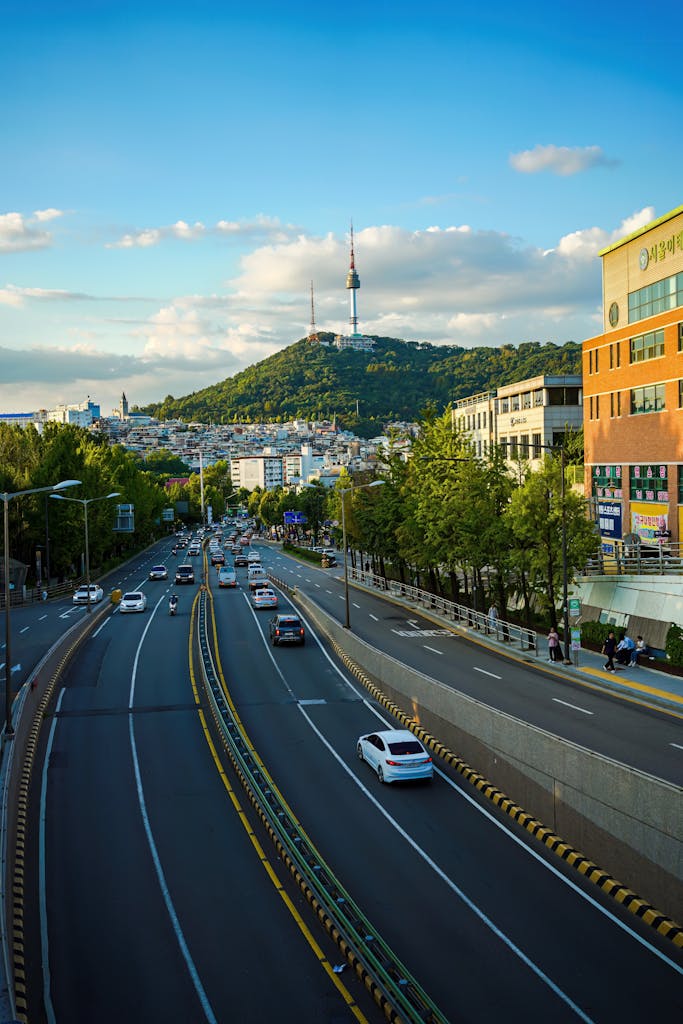
Photo by Nuhyil Ahammed @pexelsphoto
- Endlessly layered—you can visit five times and see five different cities
- Safe at all hours—solo female travelers walk home at 3 AM without fear
- Food-obsessed—from ₩5,000 street snacks to Michelin stars, every meal is an event
- Trend-forward—K-beauty, K-pop, K-fashion, K-content—Seoul leads, the world follows
- Efficient but human—subways run on time, but pojangmacha still exist
- A city that actually sleeps (but also never sleeps)—quiet neighborhoods at dawn, raging clubs at 5 AM, both true
Seoul becomes less a destination and more a relationship.
What this place whispers to your heart – the emotional promise
You’ll eat Korean BBQ at 2 AM in an alley and feel more alive than you have in months. You’ll hike Bukhansan at dawn and watch the city wake up below you. You’ll ugly-cry in a noraebang singing a K-pop song you learned phonetically. You’ll spend three hours in a jjimjilbang and emerge feeling like you shed a layer of stress you’ve been carrying for years.
Seoul won’t fix your life.
But it will show you what a city looks like when it refuses to choose between tradition and innovation, between fast and slow, between global and local.
It just holds all of it—and lets you pick your own Seoul.
This is the kind of place you bring:
- Your K-drama obsession when you’re ready to walk the actual streets
- Your exhaustion when you need a city that can be 24/7 chaos or 3 AM jjimjilbang silence
- Your appetite when you’re ready to eat your way through one of the world’s great food cities
- Your curiosity when you want to see what happens when a culture goes through war, dictatorship, economic miracle, and global cultural dominance in 70 years
- Yourself when you need a city that doesn’t ask you to perform one version of who you are
What follows you home – after you leave
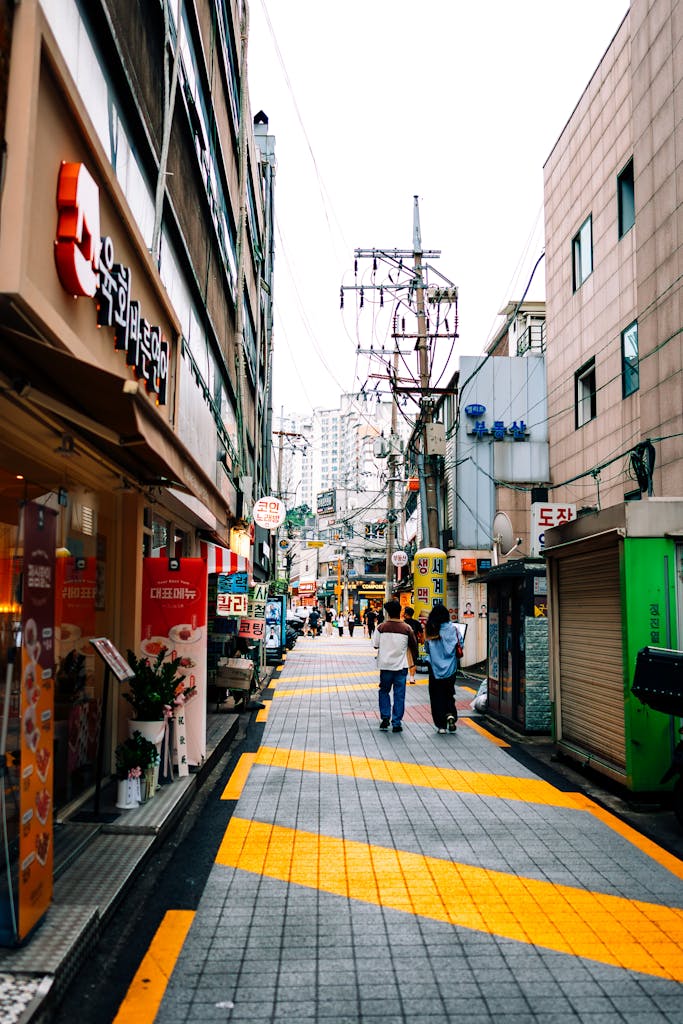
Photo by Mohammed Mehdaoui @pexelsphoto
- You’ll leave Seoul, South Korea and your skincare routine will never be the same.
- Neither will your standards for public transportation, street food, or what “efficient” actually means.
- You’ll remember: what it felt like to eat tteokbokki at a street cart at midnight. What Bukchon looked like at sunset. What singing badly with strangers at 4 AM taught you about joy.
- Some people leave Seoul and immediately book the return trip.
- Some people leave and start learning Korean.
- Some people leave and realize they needed a city that could match their energy—whatever that energy was.
- All three are valid.
What matters is this: Seoul showed you that cities don’t have to choose. They can be ancient and futuristic. Traditional and trendy. Chaotic and efficient. All at once. And once you’ve lived in that contradiction for a week—you can’t unsee it.
How long you can linger, and what it really cost
⌛Time:
- 3D2N minimum—palace, markets, nightlife, shopping, barely scratches surface
- 5D4N ideal—multiple neighborhoods, day trip to DMZ, proper food exploration, recovery time
- 7D6N+—deep dive, side trips (Busan, Jeju), seasonal experiences, actually understanding the city
💸Budget Range:
- Budget trip: $500–$900 USD per person (5 days)
- Budget airline, hostel/guesthouse (₩25,000–50,000/$19–38/night), street food and convenience stores, subway only, free palaces/temples, markets, solo karaoke, calculated spending
- Comfortable trip: $1,200–$2,200 USD per person
- Mid-tier airline, 3-star hotel in Myeongdong/Hongdae (₩80,000–150,000/$60–115/night), mix of street food and restaurants, Korean BBQ splurges, taxis when tired, shopping buffer, beauty hauls, nightlife, DMZ tour
- “Living my Seoul fantasy” tier: $2,800–$5,000+ USD
- Direct flight, boutique hotel in Gangnam (₩200,000–400,000/$150–300/night), Michelin dining, private DMZ guide, K-pop concert tickets, luxury spa day, unlimited shopping, private tours, rooftop bars, zero budget stress
🧳Seoul is affordable compared to Tokyo or Hong Kong—street food is cheap, subways cost $1–2, and you can eat incredibly well on $20–30/day if you skip the luxury spots.
⚡If Seoul feels like the energy you’ve been craving, your next chapter might be ⤵️
The Dream Map Travel Destinations grows one story at a time.
It’s a collection of lived moments—routes taken on a whim, places that surprised you, detours that turned into stories worth keeping.
Every Dream Map travel destinations exists because someone went first.
If you’ve been there—
reached a place you didn’t expect to love
discovered a route that felt smoother than advertised
stayed longer than planned because the place earned it.
share it below.
Your experience doesn’t have to be perfect. It just has to be real.
What you add helps future travelers imagine better, plan smarter, and arrive with context instead of fantasy.
Dream Map travel destinations grows one story at a time—quietly, collectively, and with intention
This page evolves with shared experiences. Verified patterns are folded back into the map over time.
MappedAtlas improves with commuter reports. If you find outdated routes, changed timetables, or new paths, send a quick update.
Last updated: March 2026