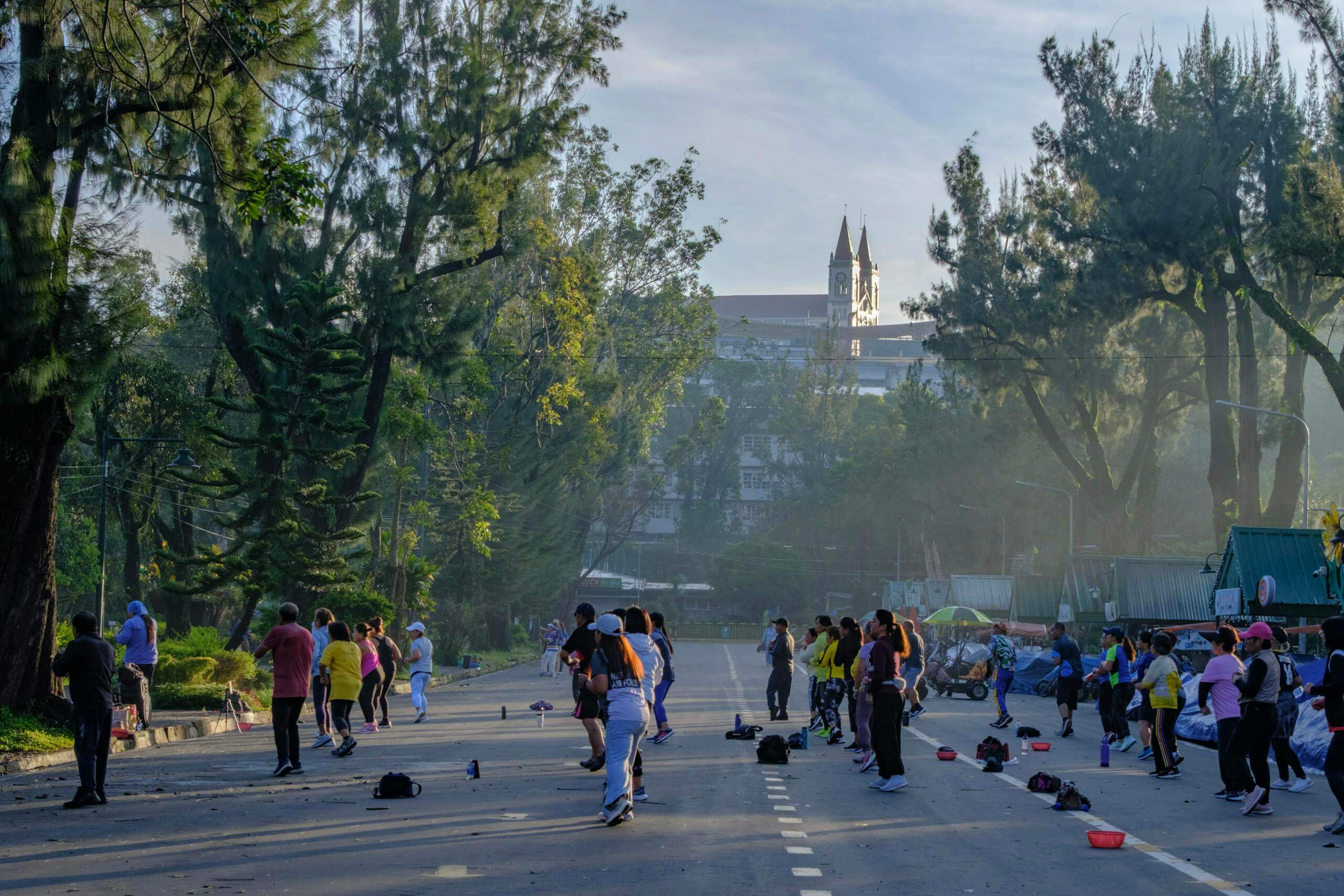
Hanoi + Ha Long Bay, Vietnam — a Capital That Remembers and a Bay That Feels Like the World’s First Draft
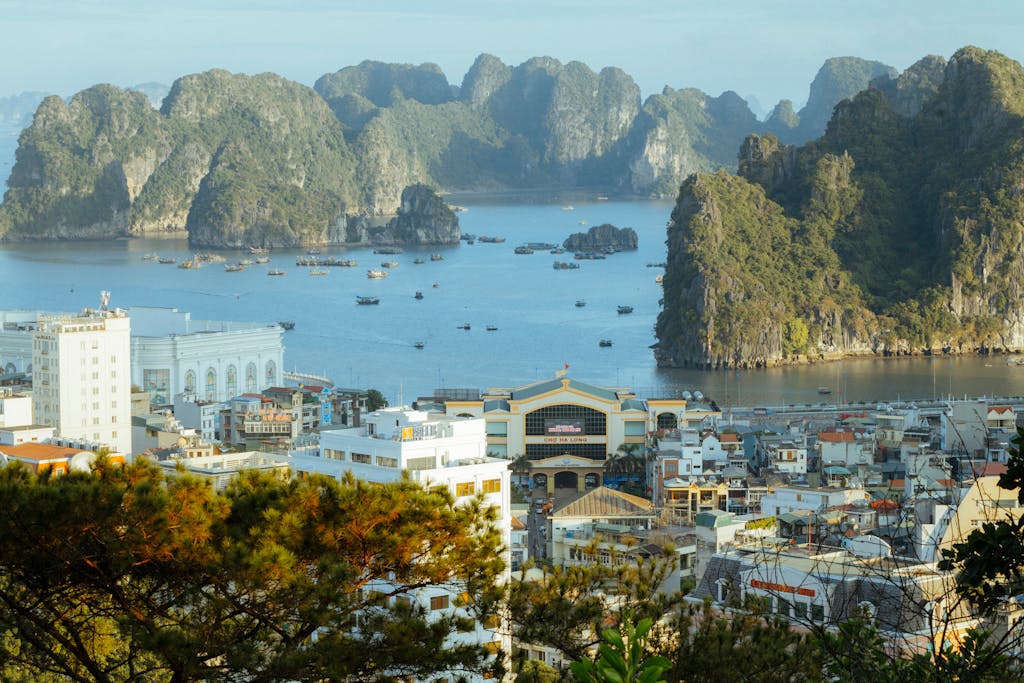
Photo by HONG SON @pexelsphoto
Hanoi Ha Long Bay Vietnam tour is the north’s answer to the south’s chaos—and the answer is: we’ve been here longer, we remember more, and our landscapes were carved by gods, not geology.
This dream destination is actually two experiences that function as a pair—Hanoi, Vietnam’s 1,000-year-old capital, and Ha Long Bay, a UNESCO World Heritage seascape 170 kilometers east where 1,600+ limestone karst islands rise from emerald water like the earth forgot to finish rendering.
You can’t do one without the other. They’re northern Vietnam’s yin and yang: Hanoi is history compressed into narrow streets where motorbikes navigate lanes built for horses, where lakes hold legends, where every corner has witnessed a dynasty, a war, a revolution. Ha Long Bay is nature on a scale that makes you question if humans were ever meant to be the main character.
Together, they show you Vietnam’s range—ancient and eternal, human and geological, frantic and still.
⚠️ Essentials for Tourist: Mandatory Digital Arrival Card (2026). As of April 15, 2026, all international travelers arriving at Ho Chi Minh City (Tan Son Nhat – SGN) must submit a Vietnam Digital Arrival Card online via the official portal (prearrival.immigration.gov.vn) up to 72 hours before landing.
For the ones who feel the pull – this Hanoi Ha Long Bay Vietnam tour is your RESET
Hanoi: The thousand-year capital that never forgets
- Hanoi, Vietnam is what happens when a city survives a thousand years by refusing to erase its past—it just builds on top of it, layer by layer, until the present and the past exist simultaneously.
- You arrive at Nội Bài International Airport, take the 45-minute taxi/Grab into the city, and immediately feel the difference from Saigon:
- The motorbikes are just as dense, but the pace is older. The architecture is French colonial mixed with Soviet-era blocks mixed with sleek new hotels. The air smells like phở broth, lake water, and incense from temples that predate your country.
Hanoi doesn’t hustle like Saigon. It moves with the confidence of a city that’s been a capital since 1010 AD—through Chinese occupation, French colonialism, Japanese invasion, American bombing, and reunification. This city has seen things. And it remembers.
Ha Long Bay: Where limestone forgot to stop growing
- Ha Long Bay (Vịnh Hạ Long) means “Descending Dragon Bay”—legend says dragons descended here, thrashing tails creating the karst formations, then settled into the water to protect Vietnam.
- Science says: 500 million years of limestone formation, tectonic activity, erosion, and sea level rise created 1,600+ limestone islands/karsts rising from 1,553 square kilometers of emerald water.
- Either way: it looks like the gods were practicing world-building and never cleaned up the drafts.
Ha Long Bay is 170km east of Hanoi (3.5–4 hours by car). You don’t “visit” it—you cruise it, on boats ranging from budget party boats to luxury floating hotels.
When the world finally exhales, what it feels like
The Old Quarter: 36 Streets, 1,000 Years of Commerce
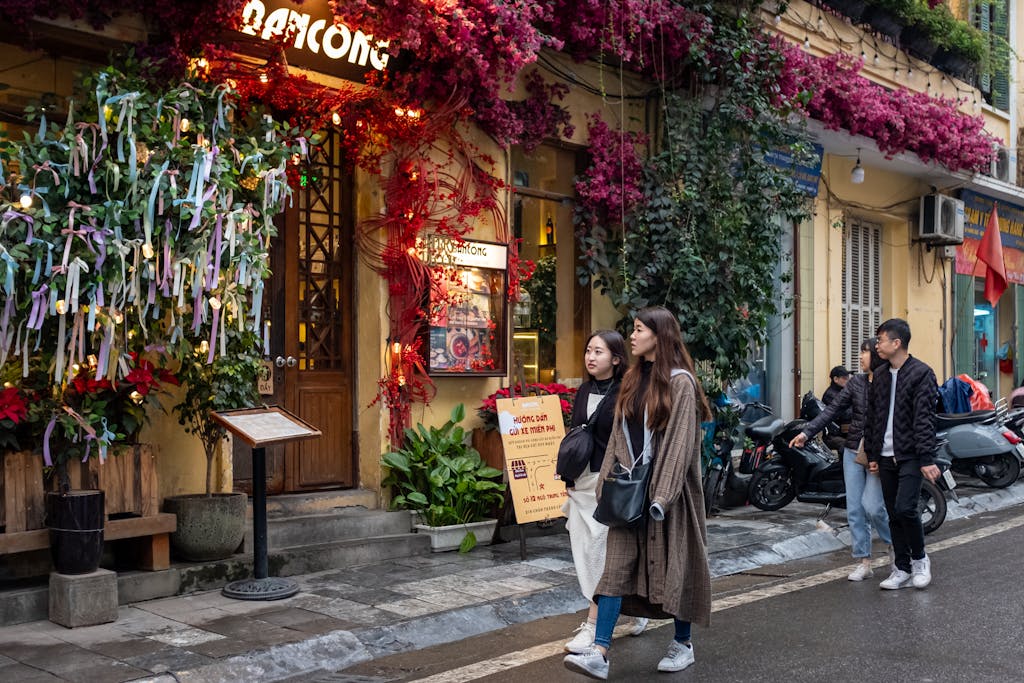
Photo by Kirandeep Singh Walia @pexelsphoto
- This is Hanoi’s beating heart—a maze of narrow streets named after the trades that operated there for centuries: Hàng Bạc (Silver Street), Hàng Mã (Votive Paper Street), Hàng Gà (Chicken Street).
- Mornings start at 5:30 AM with phở vendors setting up on sidewalks. You sit on plastic stools (standard Vietnamese furniture) eating phở bò (₫40,000–60,000/$1.60–2.40) from a family that’s been on this corner for three generations.
- The streets are narrow—some barely 3 meters wide, built for foot traffic and carts, now jammed with motorbikes. Buildings are “tube houses”—narrow fronts (to avoid historical taxes on street frontage), stretching deep back.
- You walk. You get lost. You find:
- Đồng Xuân Market—covered market, wholesale chaos, fabric, electronics, everything
- Night Market (Friday–Sunday evenings)—pedestrian streets, street food, souvenirs, tourist energy but still fun
- Bia hơi corners—fresh beer (₫7,000–10,000/$0.30–0.40/glass), brewed daily, served on street corners, locals sitting on tiny stools, you join them
Hoan Kiem Lakes and Legends
- The city’s spiritual center. Early mornings (5–7 AM), locals do tai chi, jog, play badminton around the lake.
- Ngoc Son Temple sits on an island, connected by red The Huc Bridge. Legend says Emperor Lê Lợi received a magic sword from the Golden Turtle God here to fight Chinese invaders (15th century). After victory, the turtle took the sword back into the lake.
- Hanoi runs on legends like this—history and mythology inseparable.
The French Quarter: Colonial Grandeur, Opera Houses, Wide Boulevards
- South of the Old Quarter, the French legacy:
- Hanoi Opera House—French colonial architecture, 1911, still functioning
- St. Joseph’s Cathedral—neo-Gothic, 1886, masses in Vietnamese
- Tree-lined boulevards, cafés, boutique hotels
- This is where you see Vietnam’s layered colonization—Chinese for 1,000 years, French for 65 years, American war for 20 years, and through it all, Vietnam just… absorbed and survived.
Ho Chi Minh Mausoleum & Complex
- Uncle Ho (Bác Hồ) lies in state—embalmed, guarded, visited by thousands daily.
- The mausoleum is Soviet-style brutalist—imposing, gray, rigid. You file through in silence. No phones. No talking. You see him through glass—small, wax-like, surreal.
- Whether you agree with his politics or not, this man’s face is on every Vietnamese đồng note. His image is everywhere. The personality cult is real.
- Nearby:
- Ho Chi Minh’s Stilt House—where he actually lived (modest wooden house on stilts)
- One Pillar Pagoda—iconic Buddhist temple, 11th century, shaped like a lotus
- Presidential Palace—French colonial, beautiful, not open to public
Temple of Literature – VĂN MIẾU
- Vietnam’s first university, built 1070 AD to educate Confucian scholars and royalty.
- You walk through courtyards, gardens, pavilions. Stone stelae (turtle-backed) list names of graduates from 1442–1779. This is where Vietnam’s intellectual elite was trained for 700+ years.
- It’s quiet. Peaceful. A reminder that Vietnam’s identity isn’t just war—it’s scholarship, poetry, philosophy.
Train Street
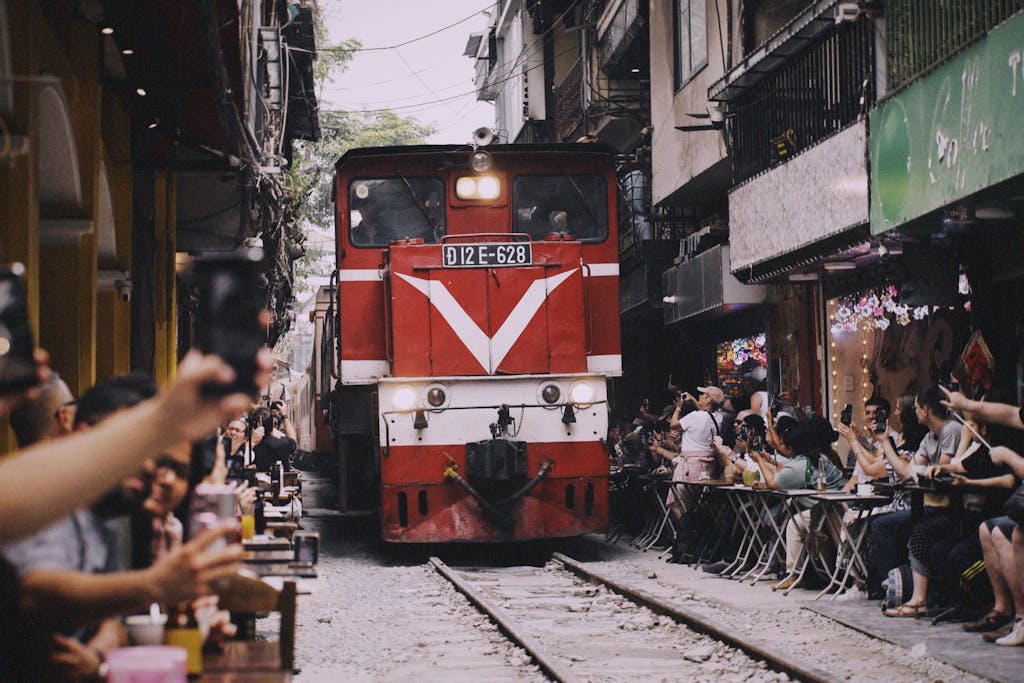
Photo by Vitaly Gariev @pexelsphoto
- A narrow residential alley where trains pass twice daily, 30cm from people’s front doors.
- Cafés line the tracks. You sit drinking cà phê trứng (egg coffee—Hanoi specialty, ₫35,000/$1.40). The train comes. Everyone moves their chairs back 30 seconds. Train passes. Chairs return.
- It’s touristy now (authorities keep trying to shut it down). But it’s also very Hanoi—pragmatic adaptation to absurd circumstances.
Hanoi Food Culture
Hanoi is Vietnam’s food capital (don’t @ Saigon people):
- Phở—northern style, cleaner broth, fewer herbs than southern version
- Bún chả—grilled pork, vermicelli, herbs, dipping sauce (Obama ate this with Anthony Bourdain at Bún Chả Hương Liên)
- Bánh cuốn—steamed rice rolls, minced pork, mushrooms
- Cà phê trứng—egg coffee, invented in Hanoi 1946 (try at Café Giảng)
- Chả cá Lã Vọng—turmeric fish, dill, peanuts (specialty dish, one famous restaurant)
- Bánh mì pâté—baguette with pâté, Hanoi does it differently than Saigon
Street food is king. The best meals cost ₫50,000 ($2) and come on plastic furniture.
What Ha Long Bay actually feels like
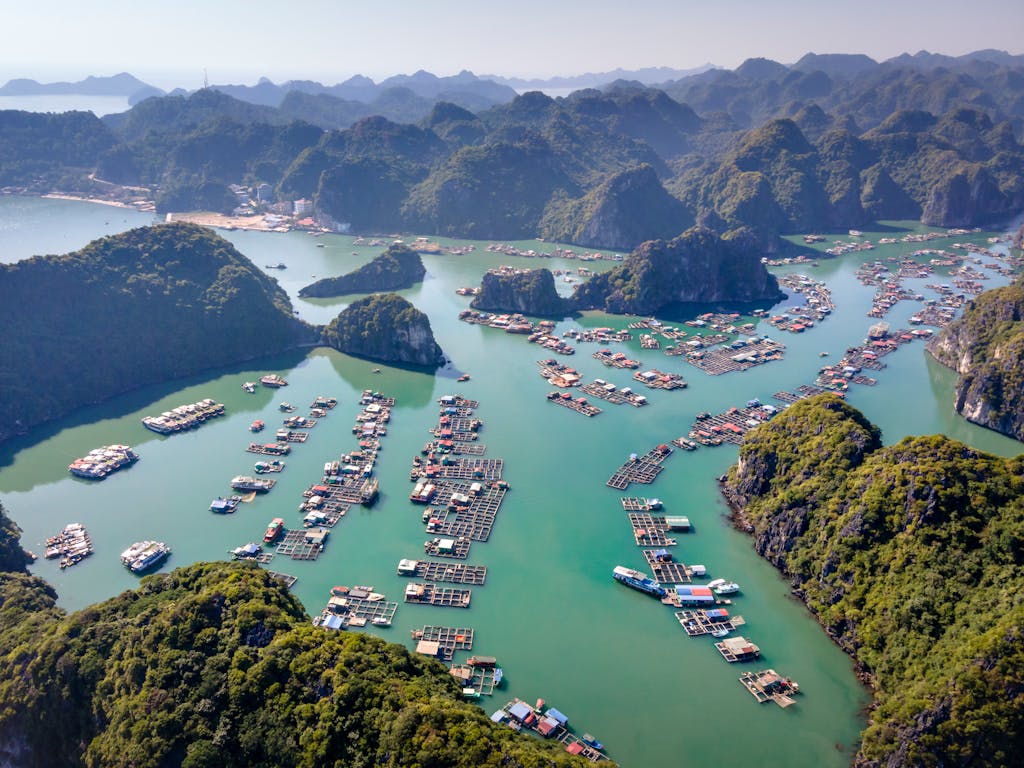
Photo by Quang Nguyen Vinh @pexelsphoto
The Cruise Experience – How Everyone Does It
You book:
- 3-night+ expeditions—luxury liveaboards, remote areas, serious budget (₫15,000,000+/$600+)
- Day trip (₫800,000–1,500,000/$32–60)—rushed, 6–8 hours on water, misses the magic
- 1-night cruise (₫2,000,000–5,000,000/$80–200)—standard, sunset/sunrise on bay, better
- 2-night cruise (₫4,000,000–10,000,000/$160–400)—explores further, Lan Ha Bay, Cat Ba Island, luxury options
Day 1 – Typical 2D1N Cruise:
- You’re picked up from Hanoi (7–8 AM), drive to Tuan Chau Marina or Halong International Cruise Port, board around noon.
- Lunch on deck—seafood, Vietnamese dishes, unlimited food (included).
- Afternoon: The boat motors into the bay. Karsts appear. Then more karsts. Then more karsts.
- Your brain struggles—the scale is absurd. Islands everywhere. Some tiny (rock pillars). Some massive (forested islands with beaches). Shapes range from realistic (mushroom-shaped) to impossible (vertical cliffs with vegetation clinging).
- You stop at:
- Sung Sot Cave (Surprise Cave)—largest cave in Ha Long Bay, massive chambers, stalactites/stalagmites, touristy but genuinely impressive
- Kayaking through karsts—paddling through sea caves, under limestone arches, into hidden lagoons
- Swimming (if weather/season allows)—emerald water, surreal to swim among karsts
- Late afternoon: The boat anchors. You watch sunset from the deck. The water turns gold. Karsts become silhouettes.
- Dinner on board—multi-course Vietnamese seafood feast.
- Evening: Squid fishing (you won’t catch anything but it’s meditative), bar drinks, stargazing.
- You sleep in a cabin—small, clean, air-conditioned, surprisingly comfortable.
Day 2:
- Wake at 6 AM for sunrise. The bay at dawn—mist rising, light filtering through karsts, silence except for water lapping the hull.
- This is the moment that justifies the trip.
- Breakfast, then:
- Tai chi on deck (optional, cruise staff leads)
- Visit to floating villages—families living on water, fishing, pearl farming (controversial—some are tourist traps)
- More kayaking or swimming
- Lunch while cruising back. Disembark around noon. Back to Hanoi by 5–6 PM.
What makes Ha Long Bay matters
- It’s not just beauty (though it’s stunning).
- It’s scale. It’s the understanding that this formation took half a billion years. It’s watching sunrise over karsts and realizing: nature doesn’t need humans to be sublime.
- Ha Long Bay humbles you not with height (like mountains) but with quantity—so many karsts you stop counting, so much water you lose sense of distance, so much time compressed into stone you feel temporary.
Ha Long Bay Alternatives – Less Crowded Options
- Ha Long Bay is Vietnam’s most famous natural site—which means it’s crowded (800+ boats daily in peak season).
- Alternatives:
- LAN HA BAY—southern extension of Ha Long, fewer boats, same karsts, better for kayaking/swimming BAI TU LONG BAY—northeast extension, even fewer tourists, more remote NINH BINH (“Ha Long Bay on land”)—2 hours south of Hanoi, limestone karsts rising from rice paddies, boat tours through caves, less touristy, day-trip-able
The quite reasons you’ll find your way back
This dream destination rewards those who give it time.
First-timers rush (2 days Hanoi, day cruise). Second-timers slow down (3+ days Hanoi, overnight cruise, Ninh Binh). Third-timers understand that northern Vietnam isn’t a checklist—it’s a conversation between human resilience (Hanoi) and natural permanence (Ha Long Bay).
Because Hanoi + Ha Long Bay, Vietnam is:
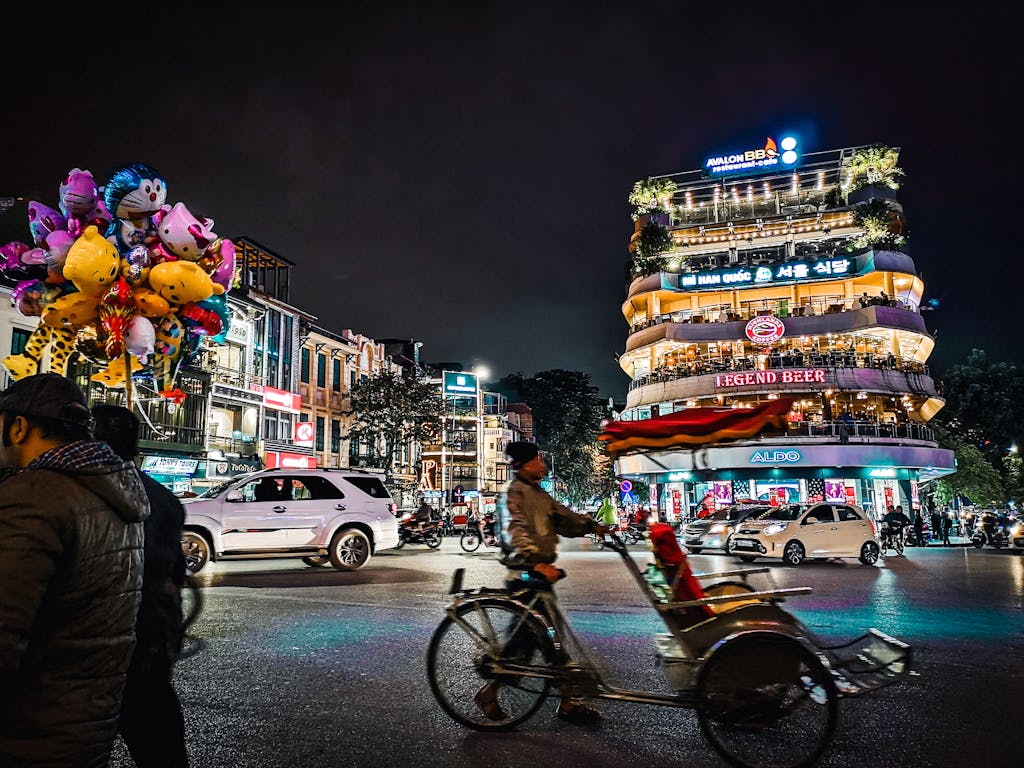
Photo by Riley Lim Ainah @pexelsphoto
- Historical depth + natural wonder—1,000-year capital + UNESCO geological masterpiece
- Vietnam’s cultural heart—Hanoi is where Vietnamese identity was forged
- Visually iconic—Ha Long Bay is one of Earth’s most recognizable landscapes
- Foodie paradise—Hanoi’s street food culture is world-class
- A natural pair—city chaos + natural stillness, human history + geological time
What this place whispers to your heart – the emotional promise
You’ll eat phở at 6 AM on a Hanoi sidewalk and understand why this dish is religion. You’ll walk the Old Quarter and feel a thousand years pressing against the present. You’ll wake on a boat in Ha Long Bay at dawn, watch mist rise between karsts, and feel your problems shrink to appropriate size.
Hanoi + Ha Long Bay won’t solve your life.
But they’ll show you what happens when humans build a capital that refuses to forget, and when nature builds a landscape that makes forgetting impossible.
This is the kind of place you bring:
- Your assumptions about Vietnam when you’re ready to see it’s more than war history
- Your appetite when you’re ready for food culture that rivals any on Earth
- Your camera for karsts at sunrise that will haunt you forever
- Your sense of scale when you need to feel small in front of geological time
- Yourself when you need a city that remembers everything and a bay that’s been here since before memory
What follows you home – after you leave
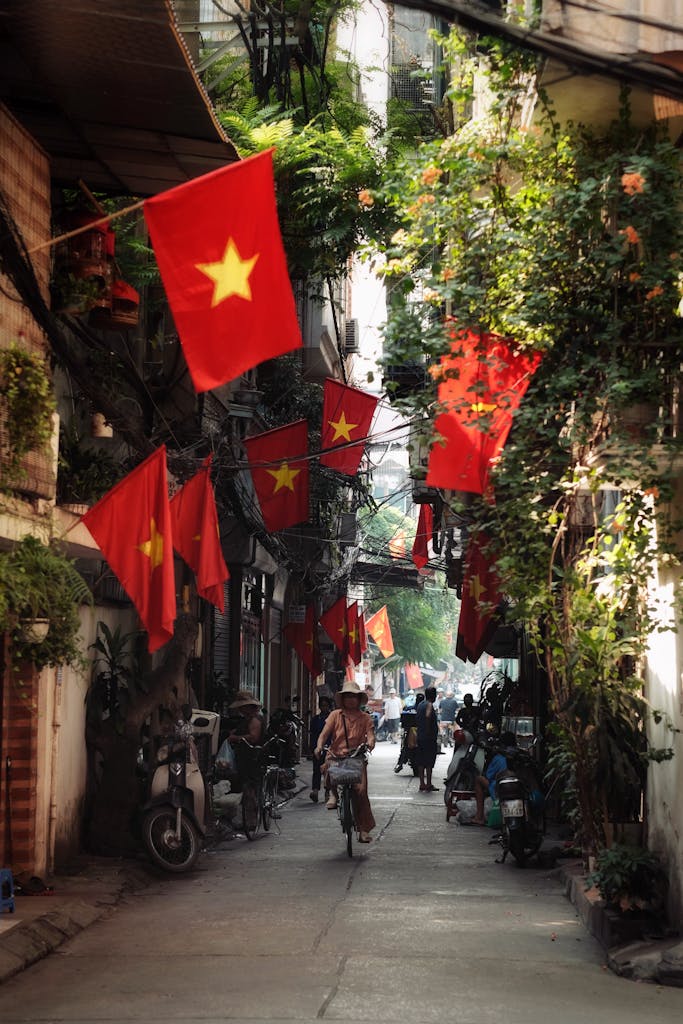
Photo by Hòa Lê Đình @pexelsphoto
You’ll leave northern Vietnam and realize: you’ve been mispronouncing “Vietnam” your whole life.
Not the word. The concept.
You thought Vietnam was war. It’s also poetry, scholarship, and a thousand years of surviving empires.
You thought Vietnam was cities. It’s also karst islands rising from primordial seas.
Some people leave and immediately plan southern Vietnam (Hoi An, Da Nang, HCMC, Mekong). Some people leave and realize they needed the north’s depth to appreciate anything else. Some people leave and spend years trying to describe Ha Long Bay at sunrise—and failing every time.
All three are valid.
What matters is this: you stood in a capital that’s been standing for a millennium, and you floated through a bay that’s been forming for half a billion years.
And that range—human time, geological time—recalibrates everything.
How long you can linger, and what it really cost
HANOI TIME & BUDGET
Time in Hanoi:
- 2D1N minimum—Old Quarter, Hoan Kiem, street food, rushed
- 3D2N ideal—adds temples, mausoleum, Train Street, proper food exploration
- 4D3N—deeper neighborhoods, day trip to Ninh Binh (“Ha Long Bay on land”), cooking class
Budget:
- Budget:
- ₫300,000–500,000/day ($12–20)—hostel, street food, walking, free sites
- Comfortable:
- ₫800,000–1,500,000/day ($32–60)—mid-range hotel, mix of street + restaurant, taxis, paid tours
- Upscale:
- ₫2,000,000+/day ($80+)—boutique hotel, fine dining + street food, private guides, spa
HANOI + HA LONG BAY COMBINED
⌛Time:
- 4D3N minimum—2 nights Hanoi, 1-night cruise, rushed
- 5D4N ideal—2 nights Hanoi, 2-night cruise or 1-night cruise + extra Hanoi day
- 7D6N comfortable—3 nights Hanoi, 2-night cruise, day trip to Ninh Binh, breathing room
💸Budget Range:
- Budget (5 days):
- Budget: $350–$600
- Hostel Hanoi (₫200,000/night), street food (₫300,000/day), budget cruise (₫2,500,000), walking tours, free sites
- Comfortable: $700–$1,200
- Mid-range hotel (₫800,000/night), mix street food + restaurants, 1-night mid-tier cruise (₫3,500,000), taxis, paid attractions
- Upscale: $1,500–$3,000+
- Boutique hotel (₫2,000,000+/night), fine dining + street food, 2-night luxury cruise (₫8,000,000+), private car, spa, flexibility
🧳If you want Ha Long’s beauty without the crowds, consider Lan Ha or Bai Tu Long cruises.
🚣🏾♀️If Hanoi + Ha Long Bay feels like the Vietnam you needed, your next chapter might be ⤵️
The Dream Map Travel Destinations grows one story at a time.
It’s a collection of lived moments—routes taken on a whim, places that surprised you, detours that turned into stories worth keeping.
Every Dream Map travel destinations exists because someone went first.
If you’ve been there—
reached a place you didn’t expect to love
discovered a route that felt smoother than advertised
stayed longer than planned because the place earned it.
share it below.
Your experience doesn’t have to be perfect. It just has to be real.
What you add helps future travelers imagine better, plan smarter, and arrive with context instead of fantasy.
Dream Map travel destinations grows one story at a time—quietly, collectively, and with intention
This page evolves with shared experiences. Verified patterns are folded back into the map over time.
MappedAtlas improves with commuter reports. If you find outdated routes, changed timetables, or new paths, send a quick update.
Last updated: March 2026