Guilin and Yangshuo, China — When You Need Mountains That Look Like Ink Paintings Come to Life
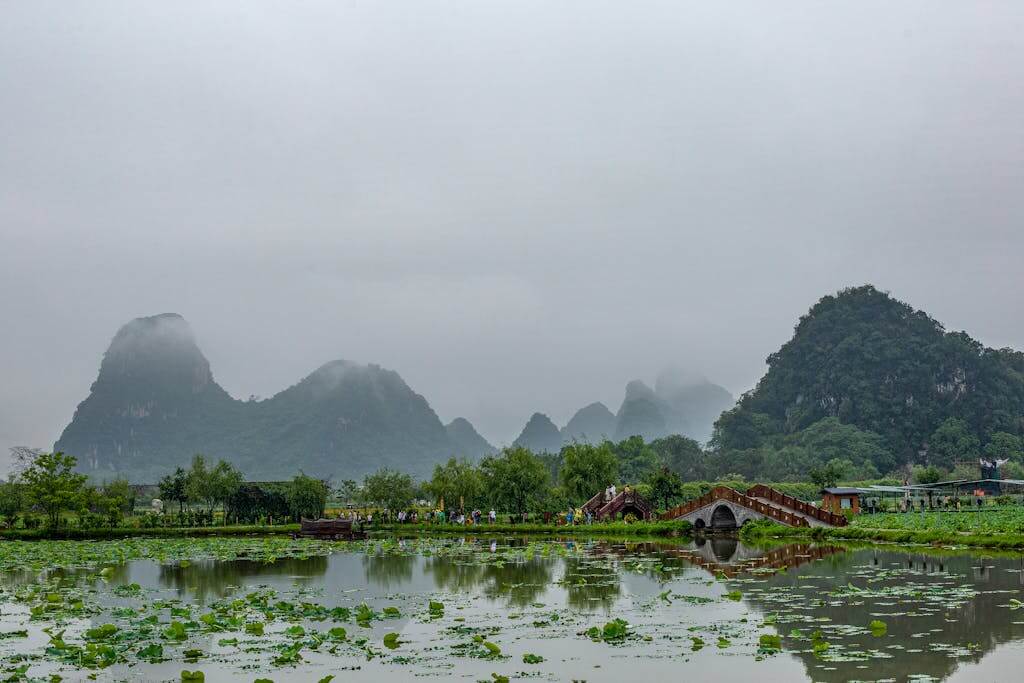
Photo by fei wang @pexelsphoto
Guilin Yangshuo China tour are what happens when you’ve seen Beijing’s imperial grandeur and you need nature so surreal it short-circuits the part of your brain that expects landscapes to make geological sense.
This dream destination is southern China’s karst heartland—limestone peaks rising vertically from rice paddies and rivers like the earth decided to practice sculpture and forgot to clean up. For 1,000+ years, Chinese painters depicted these mountains in ink wash paintings (shānshuǐ, 山水—”mountain-water”), and Western travelers assumed they were stylized, exaggerated, impossible.
Then you arrive. And you realize: the paintings were accurate.
Guilin (桂林, Guìlín—”Forest of Sweet Osmanthus”) is the regional city—700,000+ people, gateway to the karst region, where you fly in or take the high-speed train from major Chinese cities.
Yangshuo (阳朔, Yángshuò) is 65 kilometers south—a small town (population 30,000 in town center, 300,000 in county) surrounded by karst peaks, rice paddies, the Li River, and the Yulong River, where the landscape looks so perfect it feels designed.
You don’t come here for temples or history (though both exist). You come because you need to see what happens when 300 million years of limestone formation meets erosion, underground rivers, and the Li River cutting through it all.
You come because you need to float down rivers flanked by karst towers. To bike through rice paddies with mountains rising on all sides. To climb to viewpoints where the landscape looks like a classical Chinese painting—because it is the landscape Chinese painters have been painting for a millennium.
Guilin and Yangshuo aren’t cities. They’re postcards that somehow exist in three dimensions.
And once you’ve seen them, you understand why Chinese culture has been obsessed with mountains and water for 5,000 years.
⚠️ Essentials for Tourist: Visa (tourist L) or 144hr transit | [visaforchina.org](https://www.visaforchina.cn) or through local Chinese embassy. 30-Day Visa-Free Expansion (2026): Until December 31, 2026, ordinary passport holders from roughly 50 countries (including many EU nations, Japan, and South Korea) can enter China visa-free for up to 30 days.
For the ones who feel the pull – this Guilin Yangshuo China tour is your RESET
If you need beaches, nightlife, or urban energy, Guilin/Yangshuo will bore you.
If you need mountains that look like they were placed by hand, rivers that reflect karsts like mirrors, rice paddies that glow green against gray stone, and the feeling of stepping into a painting that’s been famous for 1,000 years—this is non-negotiable
This dream destination was built for:
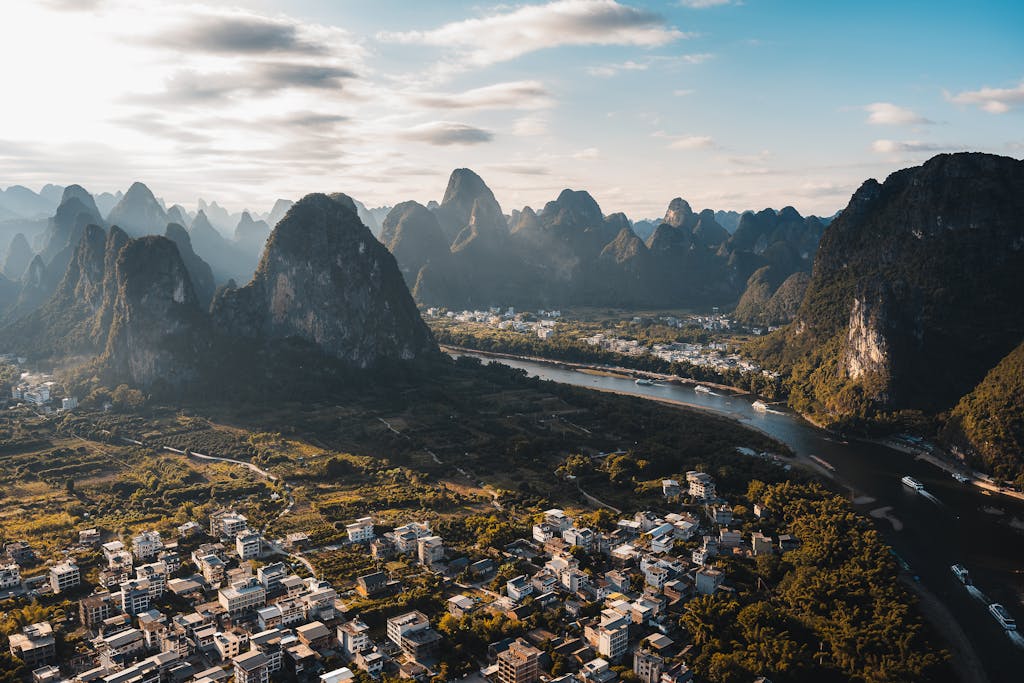
Photo by Willian Justen de Vasconcellos @pexelsphoto
- Nature lovers who need landscapes that redefine “dramatic”—karsts so vertical they defy logic
- River cruisers ready to float the Li River (Guilin to Yangshuo, 4–5 hours) or the quieter
- Yulong River by bamboo raft
- Cyclists who want to bike through rice paddies and karst scenery on flat, easy terrain
- Rock climbers (Yangshuo is one of Asia’s best climbing destinations—over 300 routes)
- Photographers chasing sunrise/sunset over karsts, rice terraces, river mist, cormorant fishermen
- Travelers needing rural China after Beijing/Shanghai intensity—slower, greener, softer
- Anyone who’s seen Chinese landscape paintings and wants to stand inside one
When the world finally exhales, what it feels like
GUILIN: 桂林—The Gateway City
- Guilin is where you arrive—by plane (Guilin Liangjiang International Airport) or high-speed train from Guangzhou (3 hours), Shenzhen (3.5 hours), Hong Kong (4 hours via train connection).
- The city itself is pleasant but unremarkable—modern Chinese city, clean, functional, built around two central lakes and the Li River.
What you actually do in Guilin:
- ELEPHANT TRUNK HILL (象鼻山, Xiàngbíshān) A karst formation shaped like an elephant drinking from the river. Iconic, touristy, photo op. Entry: ¥55 ($8).
- TWO RIVERS AND FOUR LAKES (两江四湖) Scenic waterway system through Guilin—boat cruises (¥190/$27), evening light shows, walking/biking paths. Pretty but not essential.
- REED FLUTE CAVE (芦笛岩, Lúdí Yán) Massive limestone cave, 240 meters deep, stalactites/stalagmites lit up in neon colors (very Chinese aesthetic—dramatic, colorful, over-the-top). Entry: ¥90 ($13).
- SEVEN STAR PARK (七星公园) Largest park in Guilin, karst hills, caves, pandas (if you didn’t see them in Chengdu). Entry: ¥55 ($8).
Honest assessment: Most travelers spend 1 night in Guilin, then move to Yangshuo (where the real magic is).
THE LI RIVER CRUISE: 漓江, Lí Jiāng—The Main Event
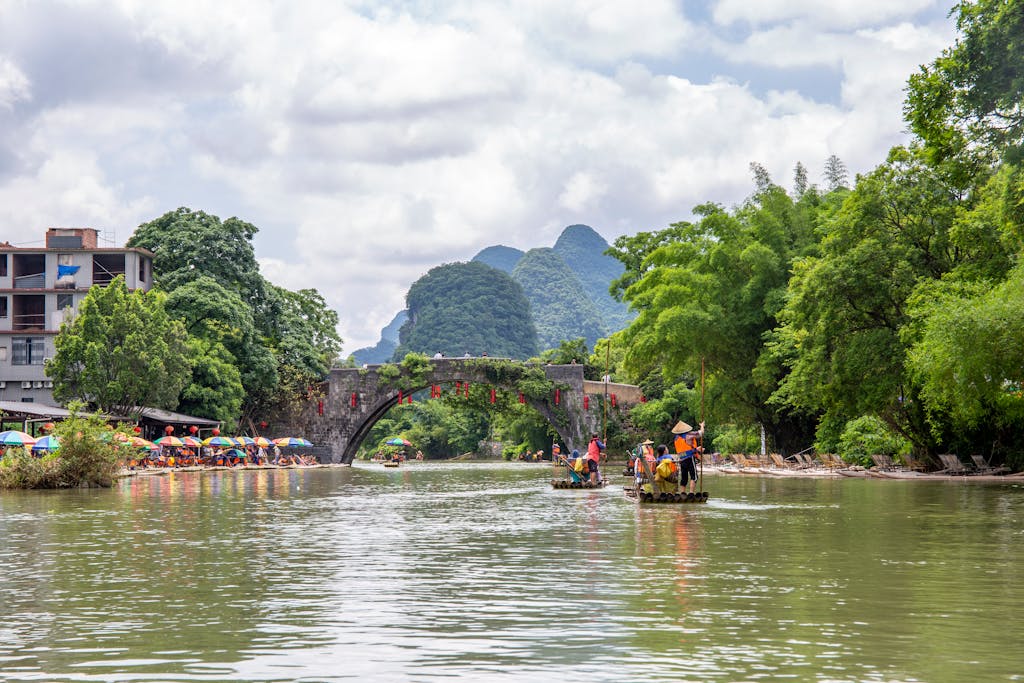
Photo by fei wang @pexelsphoto
This is why people come to Guilin.
The Li River flows 83 kilometers from Guilin to Yangshuo, flanked by karst peaks the entire way. The scenery is absurd—every bend reveals another postcard: limestone towers, bamboo groves, water buffalo grazing, fishermen on bamboo rafts with cormorant birds.
Famous sections:
- Nine Horse Fresco Hill—cliff face with mineral stains that (allegedly) look like nine horses (you’ll see maybe three)
- Yellow Cloth Reflection (黄布倒影)—calm section where karsts reflect perfectly in the water, appears on the ¥20 RMB note
- Xingping section—most scenic stretch, where the iconic “20 yuan view” is
THE CRUISE:
- Most tourists take the 4–5 hour cruise from Guilin (or more commonly, Zhujiang Pier, 40km south of Guilin) to Yangshuo.
- Large tourist boats: ¥215–300 ($30–42) depending on class, 4–5 hours, meals included, hundreds of tourists, comfortable but crowded
- Smaller boats: More expensive, fewer people, same route
- You board around 9 AM. The boat motors downstream. Karst peaks rise on both sides—some forested, some bare gray limestone, all vertical.
By hour three, you’re karst-saturated—they all start blending. But then you round a bend and see a fisherman on a bamboo raft with cormorants, mountains rising behind him, mist rolling through valleys, and you remember: this is why you came.
You arrive in Yangshuo around 1–2 PM. You step off the boat into a small town surrounded by karsts. And you realize: the cruise was the appetizer. Yangshuo is the main course.
YANGSHUO: 阳朔—Where You Actually Stay
Yangshuo is a small town that became a backpacker hub in the 1980s, then a domestic Chinese tourist destination, and now exists in that sweet spot where it’s touristy but still beautiful, developed but not destroyed. The town sits in a valley surrounded by karst peaks. Everywhere you look: mountains. Rice paddies. Rivers.
WEST STREET: 西街, Xī Jiē
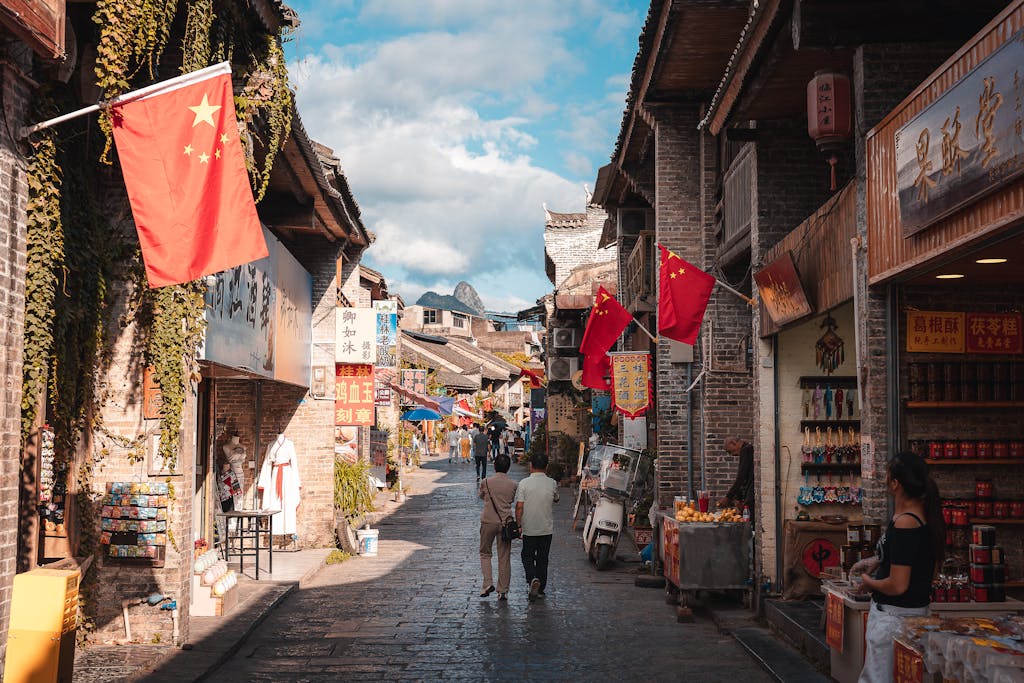
Photo by Willian Justen de Vasconcellos @pexelsphoto
- The main tourist street—souvenir shops, cafés, Western food, bars, hostels. Crowded, touristy, but also charming—pedestrian-only, limestone buildings, lanterns at night.
- You’ll eat here, drink here, book tours here, and complain it’s too touristy—while also enjoying the convenience.
- What makes Yangshuo matter:
- It’s not the town. It’s what’s around the town.
YULONG RIVER: 遇龙河, Yùlóng Hé—The Quieter, Better River
While most tourists do the Li River cruise (Guilin to Yangshuo), locals and savvy travelers know: the Yulong River is better.
Bamboo rafting–竹筏, Zhú Fá
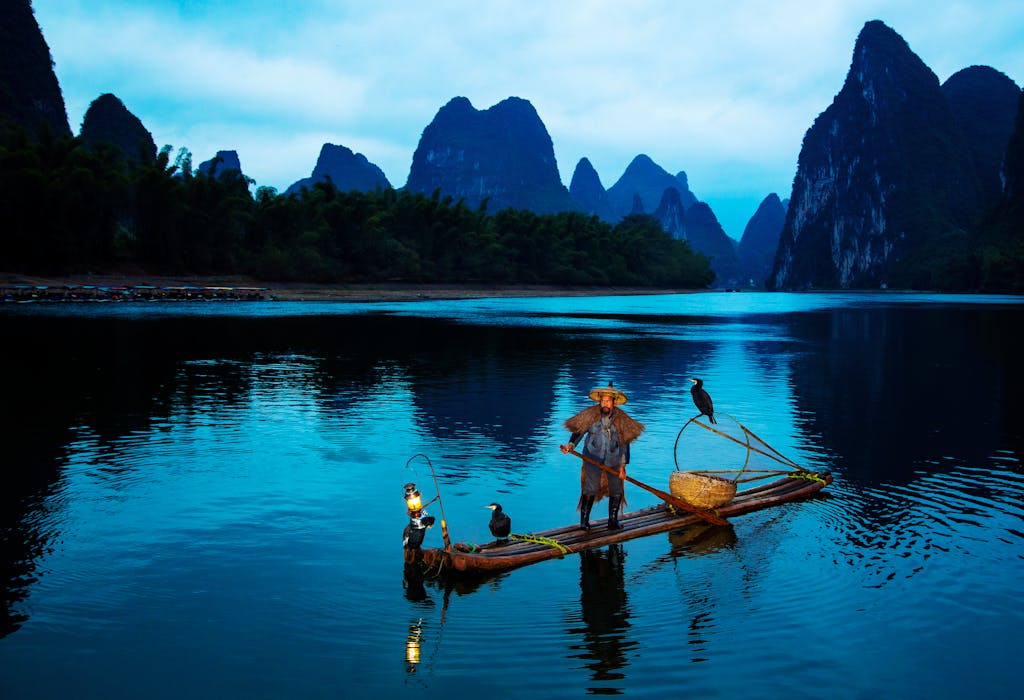
Photo by kevin yung @pexelsphoto
- You hire a bamboo raft (two people per raft, one operator) and float downstream for 1–2 hours through karst scenery even more stunning than the Li River—and quiet.
- Cost: ¥120–200 per raft ($17–28, holds two passengers)
- Route: Several sections available—Jinlong Bridge to Jiuxian is most popular (6km, 1.5 hours)
- Operators pole the raft manually, no motor, just water sounds and birds
- You float past rice paddies, water buffalo, stone bridges, karst peaks reflected in calm water. It’s meditative. Photogenic. The landscape you came to see.
- Some sections have small “dams” (more like speed bumps)—the raft tilts, you get slightly wet, everyone laughs. It’s gentle, safe, family-friendly.
This is the best money you’ll spend in Yangshuo.
CYCLING THROUGH RICE PADDIES: The Iconic Yangshuo Experience
- Yangshuo is flat (the karsts are vertical, but the valley floor is pancake-flat). This makes it perfect for cycling.
- You rent a bike (¥20–40/day, $3–6, everywhere in town), grab a map or GPS route, and ride into the countryside.
- Popular routes:
- YULONG RIVER ROAD—paved road following the river, rice paddies on both sides, karsts rising everywhere. 20–30km loop, easy, stunning.
- MOON HILL (月亮山, Yuèliàng Shān)—8km from Yangshuo, karst peak with a moon-shaped hole. You can climb it (800+ steps, 30 minutes, ¥15 entry, panoramic views at top).
- FULI BRIDGE (福利古镇)—15km from Yangshuo, old stone bridge, traditional village, fewer tourists.
You ride through:
- Rice paddies glowing green
- Villages where elderly women sit outside courtyard homes
- Water buffalo cooling in ponds
- Karst peaks everywhere—you stop counting after fifty
- No hills (except the karsts, which you’re not climbing on a bike). Just flat, easy pedaling through landscapes that look Photoshopped.
- Budget 3–5 hours for a half-day ride. Bring water, sunscreen, and your camera.
ROCK CLIMBING: 阳朔攀岩—Asia’s Climbing Capital
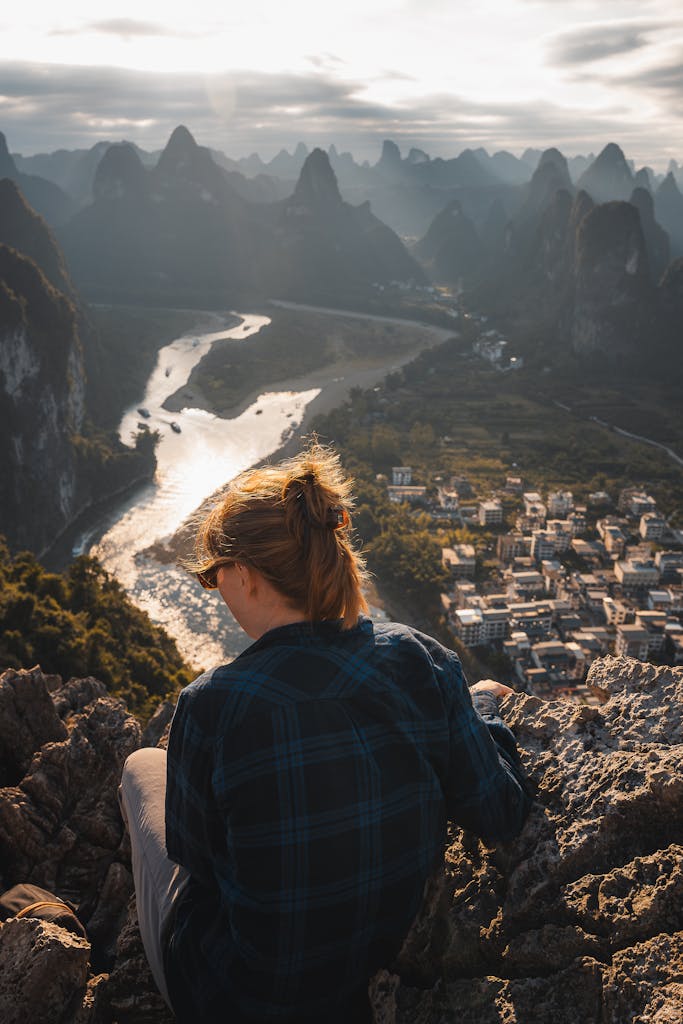
Photo by Willian Justen de Vasconcellos @pexelsphoto
- Yangshuo has 300+ bolted climbing routes on limestone karsts—from beginner-friendly to expert-level multi-pitch.
- Famous crags:
- Moon Hill
- Wine Bottle Cliff
- The Egg
- Twin Gates
- You don’t need to be an expert—climbing schools offer beginner courses (half-day, full-day, multi-day).
- Half-day intro: ¥280–380 ($39–53)—guide, equipment, transport to crag, instruction
- Full-day: ¥480–680 ($67–95)
- Even if you don’t climb, watching climbers on sheer limestone faces with rice paddies below is spectacular.
SUNRISE AT XIANGGONG HILL: 相公山, Xiānggōng Shān
- If you want the classic Guilin karst photo—the one that looks like an ink painting—you wake up at 5 AM and go to Xianggong Hill.
- It’s 40km from Yangshuo (hire a driver, ¥150–200/$21–28 round-trip with waiting time). You climb 400+ steps in the dark. You reach the viewpoint just as the sky lightens.
- And then: the Li River curves through karst peaks, mist rising from the water, fishermen on bamboo rafts, light turning the scene gold.
- This is the photo. This is the painting. This is why you came.
- Entry: ¥60 ($8). Worth every yuan.
CORMORANT FISHING: 鸬鹚捕鱼—Living Tradition, Tourist Performance
- Traditional Chinese fishing method—fishermen use trained cormorant birds to catch fish. A ring around the bird’s neck prevents it from swallowing large fish, so it returns them to the boat.
- You’ll see this on the Li River cruise (sometimes staged for tourists).
- In Yangshuo, you can book evening cormorant fishing shows (¥80–150/$11–21)—fishermen on bamboo rafts, lanterns, birds diving. It’s touristy. It’s also beautiful—especially photographed at twilight.
The quite reasons you’ll find your way back
This dream destination rewards slow exploration. First-timers rush (Li River cruise, one night Yangshuo, done). Second-timers slow down (3+ nights Yangshuo, cycling multiple days, Yulong River, sunrise). Third-timers rent motorcycles, explore outer villages, find karsts where tourists haven’t reached yet.
Yangshuo becomes less a destination and more a basecamp—for cycling, climbing, photographing, and remembering what it feels like when landscape makes you stop mid-pedal and just stare.
Because Guilin and Yangshuo, China are:
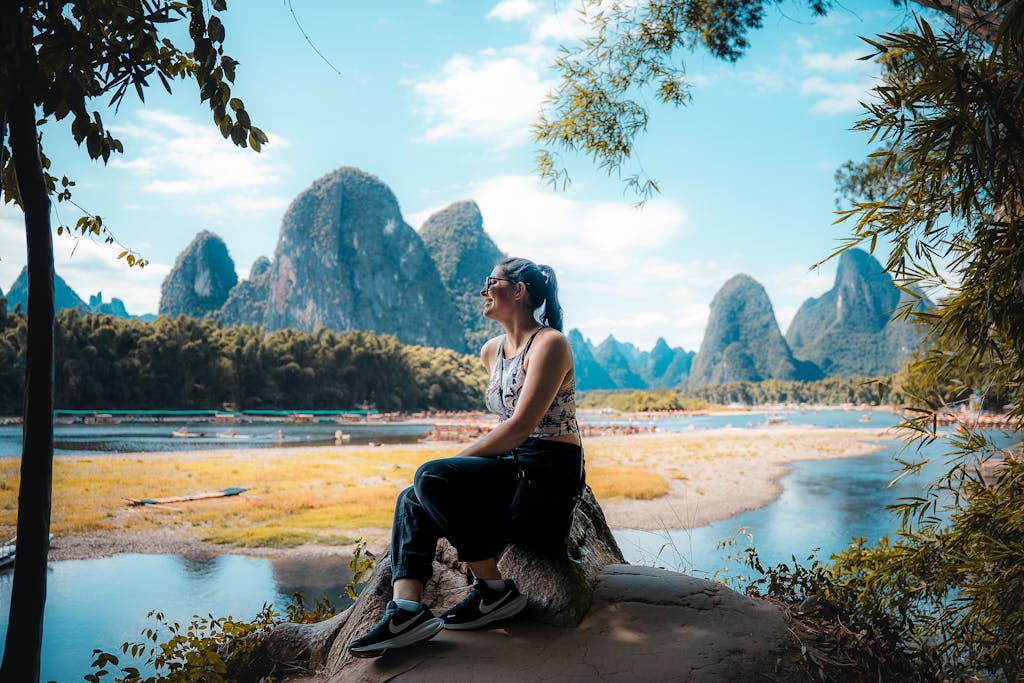
Photo by Willian Justen de Vasconcellos @pexelsphoto
- Visually iconic—the landscape Chinese painters have painted for 1,000 years, in real life
- Accessible beauty—no technical hiking required, flat cycling, gentle bamboo rafts
- Photographically perfect—sunrise, sunset, rice paddies, karsts—every angle is a postcard
- Pace-changing—after Beijing’s intensity, this is rural China, slower, greener
- Endlessly layerable—first visit: Li River cruise. Second visit: deeper cycling, climbing. Third visit: hidden villages, off-route karsts
What this place whispers to your heart – the emotional promise
You’ll float down the Yulong River on a bamboo raft, mountains rising on all sides, and realize you’ve stopped talking—because what do you say when the landscape exceeds language? You’ll cycle through rice paddies at sunset, karst peaks glowing gold, and pull over seventeen times because every angle demands a photo. You’ll wake at 5 AM to climb Xianggong Hill and watch the Li River reveal itself through mist.
Guilin and Yangshuo won’t challenge you physically (unless you climb).
But they’ll recalibrate what you think “beautiful” means—because this isn’t beach beauty or mountain beauty or forest beauty. This is Chinese landscape painting beauty—karsts that look drawn, rivers that reflect perfectly, mist that rises on cue.
And once you’ve seen it, once you’ve floated through it, once you’ve cycled through rice paddies with those vertical mountains rising impossibly—you understand why Chinese culture has been obsessed with “mountain-water” landscapes for millennia.
Because when you get it right—when the mountains rise like this, when the water reflects like this—it stops being scenery. It becomes art you can inhabit.
This is the kind of place you bring:
- Your camera for landscapes that look fake but are real
- Your bicycle (rented) for the easiest, most beautiful rides you’ll ever take
- Your exhaustion when you need green and quiet after urban China
- Your sense of wonder when you need nature that doesn’t make sense geologically but exists anyway
- Yourself when you’re ready to step inside a Chinese ink painting
What follows you home – after you leave
Photo by Willian Justen de Vasconcellos @pexelsphoto
You’ll leave Yangshuo and every other landscape will feel slightly disappointing.
Not bad. Just… flat in comparison.
You’ll remember: the bamboo raft on the Yulong River. The rice paddies glowing at sunset. The karsts that looked impossible but weren’t.
Some people leave and immediately plan deeper Guangxi/Guizhou trips—Longji Rice Terraces, Sanjiang, minority villages. Some people leave and realize they needed the karst beauty to appreciate urban China again. Some people leave and spend years trying to explain what the landscape looked like—and failing, because you have to be in it.
All three are valid.
What matters is this: you stood inside a Chinese landscape painting. Not a copy. Not a reference. The actual landscape painters have been painting for 1,000 years.
And once you’ve floated through that, once you’ve cycled through that, once you’ve watched sunrise reveal it layer by layer—you can’t look at Chinese art the same way. Because now you know: they weren’t exaggerating. They were just painting what they saw.
How long you can linger, and what it really cost
⌛Time:
- 2D1N minimum—Li River cruise + 1 night Yangshuo, rushed
- 3D2N ideal—Li River cruise, Yangshuo cycling, Yulong River bamboo raft, breathing room
- 4D3N comfortable—adds sunrise at Xianggong Hill, rock climbing, longer cycling routes
- 5D4N+—multiple cycling days, deeper countryside exploration, rock climbing course
💸Budget Range:
- Budget: ¥300–500/day ($42–70)
- Hostel/guesthouse Yangshuo (¥60–120/night, $8–17), street food (¥50–80/day, $7–11), bike rental, DIY Li River (bus to viewpoints instead of cruise), Yulong bamboo raft
- Comfortable: ¥600–1,200/day ($84–168)
- Mid-range hotel with karst view (¥200–400/night, $28–56), mix of local + Western food (¥150–250/day, $21–35), Li River cruise, Yulong raft, cycling, climbing intro, taxis
- Upscale: ¥1,500+/day ($210+)
- Boutique resort (¥600–1,500+/night, $84–210+), fine dining + local food, private Li River boat, private guides, rock climbing instruction, sunrise tours, spa, zero stress
🧳Yangshuo is affordable—street food is cheap, bike rentals cost pocket change, bamboo rafts are reasonable. Splurge on: nice hotel with karst view (worth it) and sunrise tour.
🚣🏾♀️If Guilin and Yangshuo feel like the China you needed, your next chapter might be ⤵️
The Dream Map Travel Destinations grows one story at a time.
It’s a collection of lived moments—routes taken on a whim, places that surprised you, detours that turned into stories worth keeping.
Every Dream Map travel destinations exists because someone went first.
If you’ve been there—
reached a place you didn’t expect to love
discovered a route that felt smoother than advertised
stayed longer than planned because the place earned it.
share it below.
Your experience doesn’t have to be perfect. It just has to be real.
What you add helps future travelers imagine better, plan smarter, and arrive with context instead of fantasy.
Dream Map travel destinations grows one story at a time—quietly, collectively, and with intention
This page evolves with shared experiences. Verified patterns are folded back into the map over time.
MappedAtlas improves with commuter reports. If you find outdated routes, changed timetables, or new paths, send a quick update.
Last updated: March 2026