Dream Destination: Penang, Malaysia — When You Need a City That Chose Food, Art, and Preservation Over Tearing Everything Down
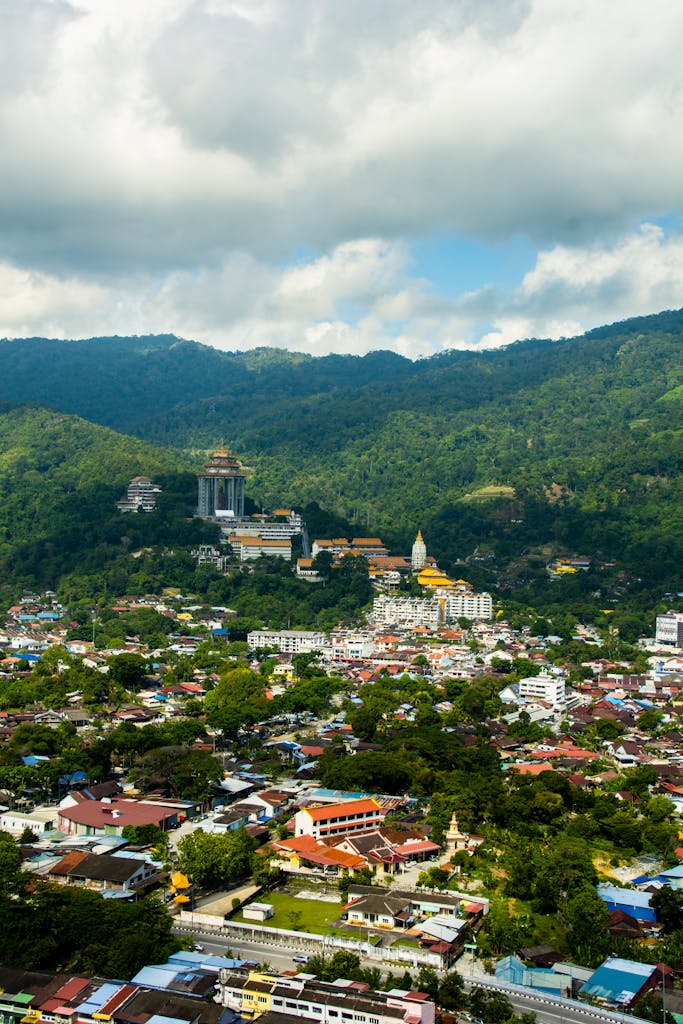
Photo by Jun Lei Lim @pexelsphoto
Penang Malaysia tour is what happens when a UNESCO World Heritage city decides: we’re not demolishing our colonial shophouses for glass towers—we’re turning them into cafés, street art galleries, and hawker stalls serving food so good it makes Singaporeans cross the border just to eat.
This dream destination is an island state off Malaysia’s northwest coast—292 square kilometers where George Town (the capital, UNESCO-listed since 2008) preserves Southeast Asia’s most intact collection of pre-war architecture, Chinese clan houses, Indian temples, Malay mosques, and British colonial buildings—all while functioning as a living, breathing city where people actually live, not just pose for photos.
Penang (槟城 in Chinese, Pulau Pinang in Malay—”Betel Nut Island”) is Malaysia’s food capital, street art pilgrimage site, heritage preservation success story, and the island that proves you can be a UNESCO site without becoming a museum.
You arrive by:- Flight to Penang International Airport (direct from KL, Singapore, Bangkok, regional hubs)
- Bridge from mainland Malaysia (13.5km Penang Bridge, second-longest in Southeast Asia)
- Ferry from Butterworth (RM1.20/$0.27, 15 minutes, iconic arrival, cars + pedestrians)
You step into George Town and immediately feel the density—narrow streets, five-foot-ways (covered walkways), shophouses from the 1800s still functioning as homes, businesses, temples. Murals on crumbling walls. Hawker stalls on corners that have served the same dishes for 60 years. Chinese medicine shops next to Indian textile stores next to Malay nasi kandar restaurants.
This is multicultural Malaysia distilled—Chinese (descendants of traders, coolies, tin miners), Indian (laborers brought by British), Malay (original inhabitants), Peranakan/Baba-Nyonya (Chinese-Malay fusion culture), Eurasians, and everyone eating each other’s food, speaking Penang Hokkien (local Chinese dialect mixed with Malay/English), and coexisting in a density that would cause conflict elsewhere but here just makes the food better.
Penang, Malaysia doesn’t perform heritage. It lives heritage—while also having modern malls, beach resorts, tech companies, and a thriving economy.
You don’t visit Penang to see temples (though they’re there). You come because you need a city where preservation won, where street food is taken so seriously it defines identity, where walking heritage districts doesn’t feel like a museum tour but like watching a city breathe.
Penang is the Malaysian city that Singapore could have been—if Singapore hadn’t chosen glass towers over shophouses, efficiency over character, and air-conditioned malls over hawker stalls that smell like heaven.
⚠️ Essentials for Tourist: MDAC is Mandatory (3 Days Prior): Except for Singaporeans, all foreign travelers must complete the Malaysia Digital Arrival Card (MDAC) online at imigresen-online.imi.gov.my within 3 days before arrival.
For the ones who feel the pull – this Penang Malaysia tour is your RESET
If you need wild nature or adventure sports, Penang will underwhelm you—it’s urban, heritage-focused, beach-adjacent.
If you need street food that justifies a trip, colonial architecture you can actually touch, and a city that successfully preserved its soul while modernizing—Penang is essential.
This dream destination was built for:
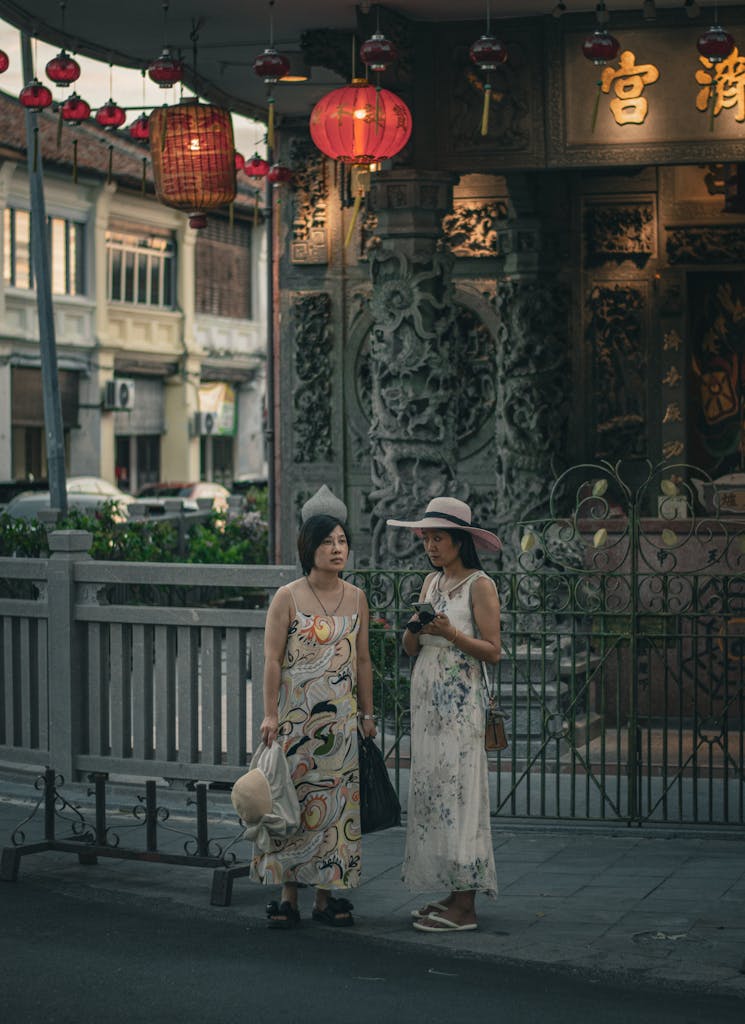
Photo by Naimish Verma @pexelsphoto
- Food pilgrims ready for hawker stalls, street food, and dishes that will reset your baseline for “delicious”
- Heritage lovers who want colonial architecture, clan houses, temples—intact, functioning, not Disneyfied
- Street art hunters chasing Ernest Zacharevic’s murals and the dozens of imitators who turned George Town into an outdoor gallery
- Photographers who need narrow streets, colorful shophouses, textured walls, golden-hour light through five-foot-ways
- Digital nomads testing Malaysia long-term—affordable, good Wi-Fi, diverse food, English widely spoken
- Culture nerds fascinated by Peranakan (Straits Chinese) culture, fusion architecture, religious syncretism
- Beach escapers who want city + beach (Batu Ferringhi is 30 minutes north)
- Anyone tired of cities that demolished their past and need proof preservation can coexist with progress
When the world finally exhales, what it feels like
GEORGE TOWN: 乔治市, UNESCO Heritage Core
George Town is where you’ll spend most of your time—the historic city on Penang Island’s northeast corner, founded 1786 by British East India Company’s Captain Francis Light.
The UNESCO core zone covers 2.5 square kilometers—narrow streets, shophouses, clan jetties, temples, mosques, churches, all compressed into walkable density.
ARCHITECTURE – Why UNESCO Cared
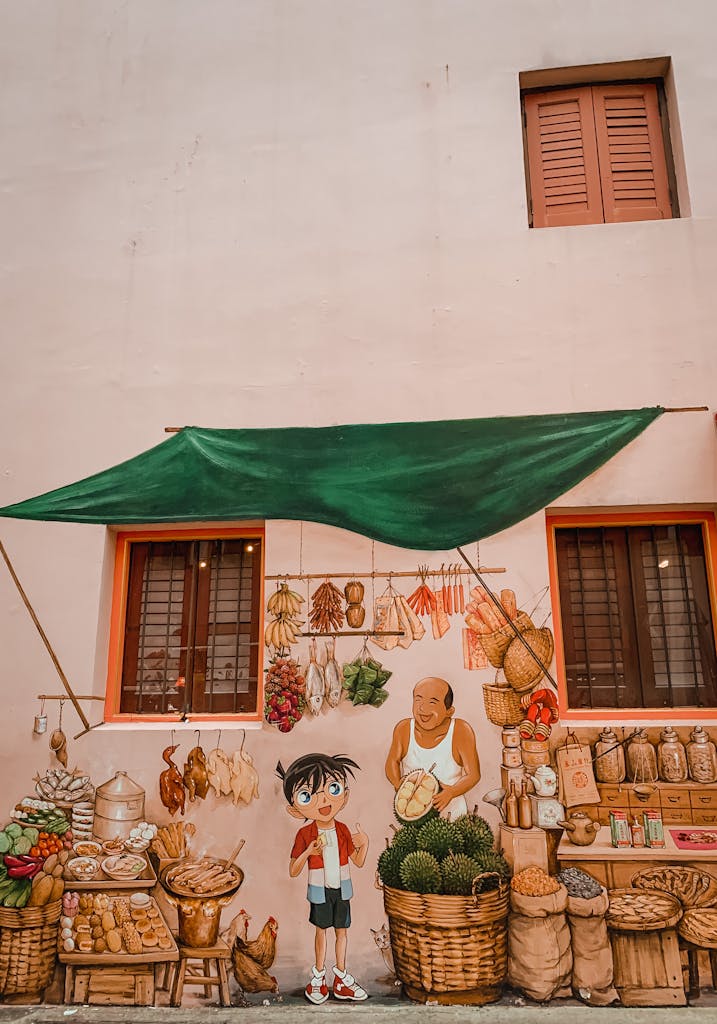
Photo by Shann @pexelsphoto
- Early Straits Eclectic (1790s–1900s)—simple, functional
- Southern Chinese Baroque (1900s–1930s)—ornate, colorful, elaborate plasterwork
- Art Deco (1930s–1940s)—geometric, streamlined
- Early Modern (1950s–1960s)—simpler, influenced by independence
- Armenian Street (亚美尼亚街)—antique shops, galleries, cafés, street art epicenter
- Lebuh Chulia—backpacker central, budget hostels, Indian restaurants
- Jalan Masjid Kapitan Keling (Pitt Street)—religious diversity showcase: mosque, Chinese temple, Hindu temple, church, all within 300 meters
- Beach Street (Lebuh Pantai)—colonial buildings, clan jetties nearby
- Love Lane—narrow, photogenic, gentrified with cafés
CLAN JETTIES (姓氏桥)
- Wooden stilt villages extending into the sea—built by Chinese clans in 19th century (Chew Jetty, Tan Jetty, Lee Jetty, Lim Jetty, etc.).
- Families still live here. You can walk the jetties (respectfully—these are homes). Chew Jetty most touristy but photogenic—wooden houses, red lanterns, sea views, souvenirs.
It’s gentrified but functional—real people, real homes, just happens to also be a tourist site.
STREET ART – The Accidental Gallery
- “Little Children on a Bicycle” (Armenian Street)—two kids on a real bicycle embedded in wall, Penang’s most Instagrammed spot
- “Boy on Chair” / “Brother and Sister on a Swing” / “Old Motorcycle”—interactive murals using real objects
The murals went viral. Copycats followed. Now George Town has 100+ murals and steel rod caricatures (wire art telling Penang history/culture). Mural hunting became a thing—people spend hours walking narrow alleys finding hidden art.
- Armenian Street vicinity
- Lebuh Armenian to Lebuh Chulia loop
- Clan jetties area
- Muntri Street / Love Lane
Honest take: The original Zacharevic pieces are fading (exposure, weather). Many are behind scaffolding or covered. New murals appear constantly. It’s touristy now—crowds at famous walls—but still charming if you go early (7–8 AM).
THE FOOD – Why People Actually Come
Penang isn’t just Malaysia’s food capital—it’s one of Asia’s great food cities, period.Hawker stalls, kopitiams (coffee shops), and restaurants serve dishes perfected over generations. Food is identity here—Penangites are obsessive, opinionated, and correct.
MUST-EAT DISHES
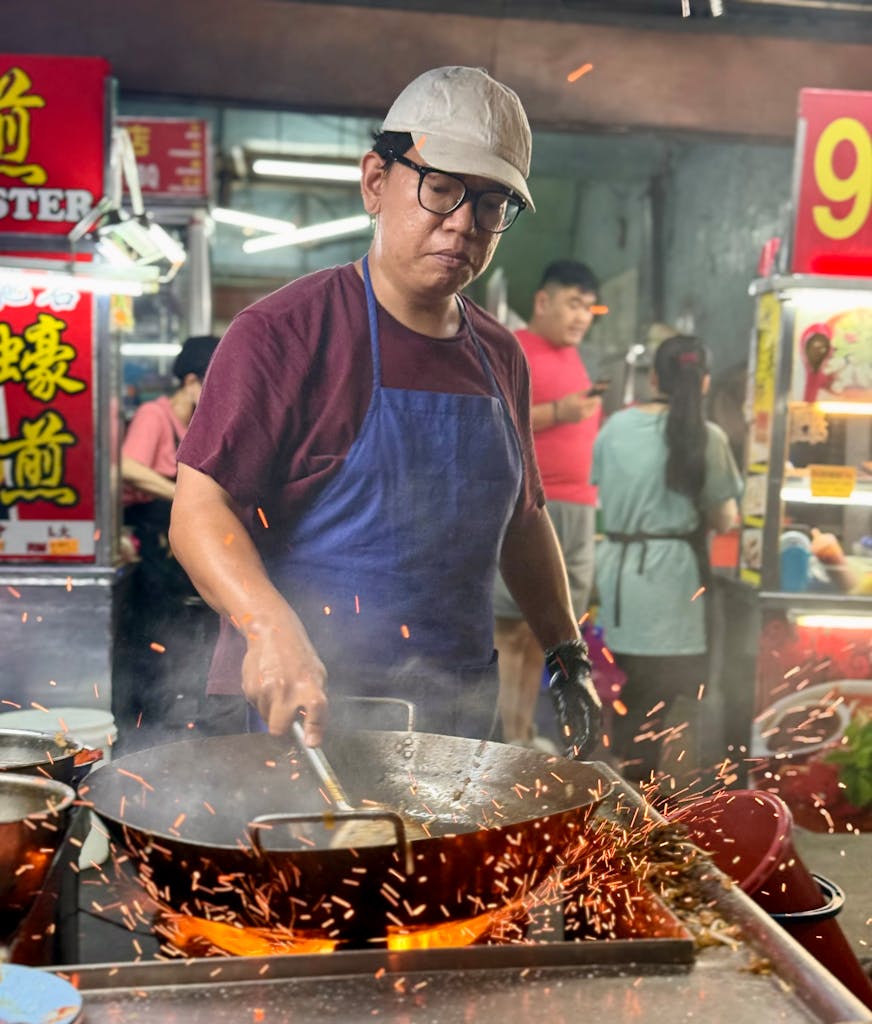
Photo by Mac Ganibo @pexelsphoto
CHAR KWAY TEOW (炒粿条)—Fried Flat Noodles: Flat rice noodles stir-fried over high heat with prawns, cockles, Chinese sausage, egg, bean sprouts, chives in dark soy sauce. Smoky (wok hei, 镬气—breath of the wok), slightly charred, addictive.
Where:- Siam Road Char Kway Teow (Jalan Siam)—legendary, lunch only, sells out, queue always
- Street stalls in Lebuh Keng Kwee
- RM7–10 ($1.50–2.20) per plate.
PENANG ASSAM LAKSA (槟城亚参叻沙): Spicy-sour fish noodle soup—mackerel broth, tamarind, torch ginger flower, mint, pineapple, thick rice noodles. Top with hae ko (shrimp paste—pungent, essential). CNN ranked it #7 in “World’s 50 Most Delicious Foods.”
Where:- Air Itam Laksa (near Kek Lok Si Temple)—famous, touristy, good
- Street stalls, morning markets
- RM6–8 ($1.30–1.75) per bowl.
- NASI KANDAR (印度回教飯): Indian-Muslim rice dish—steamed rice, choice of curries/sides (fried chicken, fish curry, okra, squid, beef rendang, etc.), mixed gravy poured over everything. Flavors chaotic, delicious.
- Where:
- Line Clear Nasi Kandar (Penang Road)—iconic, 24 hours, locals + tourists, crowded
- Hameediyah (Lebuh Campbell)—oldest (since 1907)
- RM10–20 ($2.20–4.40) depending on sides.
- PENANG HOKKIEN MEE (福建面): Prawn noodle soup—rich prawn broth, yellow noodles + bee hoon (rice vermicelli), prawns, pork, kangkung (water spinach), sambal on the side. (Note: Different from KL Hokkien Mee, which is dark soy-fried noodles.)
- Where:
- Duck Egg Char Koay Teow & Hokkien Mee (Lebuh Keng Kwee)
- Morning coffee shop stalls
- RM7–10 ($1.50–2.20).
- CENDOL (煎蕊): Dessert—shaved ice, coconut milk, palm sugar syrup, green rice flour jelly (pandan-flavored), red beans. Sweet, refreshing, necessary in Penang heat.
- Where:
- Penang Road Famous Teochew Chendul—most famous, always queue
- Kek Seng Cafe cendol
- RM3–5 ($0.65–1.10).
- CURRY MEE (咖喱面): Yellow noodles + bee hoon in spicy coconut curry broth, cockles, tofu puffs, pig blood (optional), curry leaves.
- RM7–9 ($1.50–2).
- APAM BALIK (曼煎糕)—Peanut Pancake: Thick pancake filled with crushed peanuts, sugar, creamed corn, sometimes chocolate/cheese (modern variations). Crispy edges, soft center.
- Street vendors, RM3–5 ($0.65–1.10).
- LOH BAK (卤肉)—Five-Spice Meat Rolls: Minced pork seasoned with five-spice, wrapped in bean curd skin, deep-fried. Served with chili sauce, lettuce.
- RM1.50–2.50 per piece.
- CHEE CHEONG FUN (猪肠粉)—Rice Noodle Rolls: Steamed rice noodle sheets, filled with shrimp/char siew, topped with sweet sauce, sesame seeds, chili.
- Breakfast favorite, RM5–7 ($1.10–1.50).
- NUTMEG JUICE (豆蔻汁): Penang-specific—nutmeg fruit juice (the fruit, not the spice), sweet-sour-cooling. Locals swear by it. Acquired taste for some.
- RM3–5.
HAWKER CENTERS & FOOD COURTS – Where to Eat All This
- GURNEY DRIVE HAWKER CENTER: Famous, touristy, waterfront, good variety, sunset views. Can be hit-or-miss quality (tourist pricing, some stalls coasting on reputation). But convenient, safe bet.
- RED GARDEN FOOD PARADISE: Outdoor food court, live music nightly, beer, Chinese + Malay + Indian stalls, social atmosphere. Touristy but fun.
- NEW LANE HAWKER STALLS (Lorong Baru): Evening-only street (4 PM–midnight), local favorite, Hokkien mee, popiah (fresh spring rolls), tau sar pneah (bean paste biscuits). Authentic, less touristy.
- KIMBERLEY STREET (Lebuh Kimberley): Famous for duck kway chap, koay teow th’ng (clear noodle soup), morning stalls.
- AIR ITAM MARKET: Near Kek Lok Si Temple, excellent assam laksa, local market atmosphere.
- PULAU TIKUS MARKET: More local, less touristy, morning char kway teow, chee cheong fun, curry mee.
CULTURAL SITES – When You Need a Break from Eating
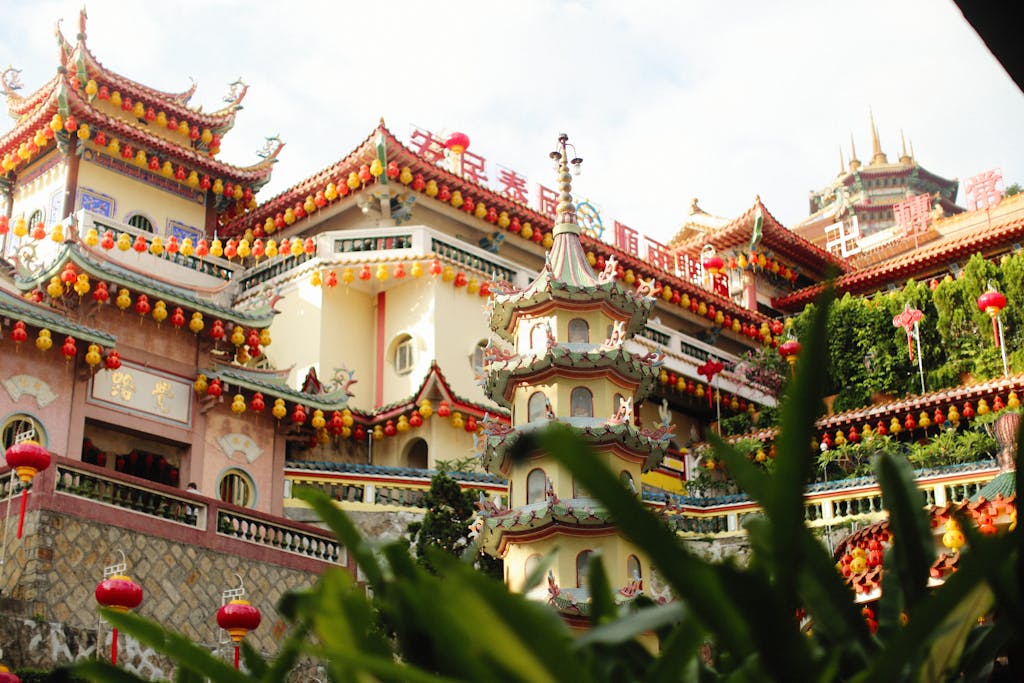
Photo by Alexey Demidov @pexelsphoto
- KEK LOK SI TEMPLE (极乐寺)—Temple of Supreme Bliss: Southeast Asia’s largest Buddhist temple complex—hilltop site, pagoda, giant bronze Kuan Yin statue (36.5m), gardens, incense smoke, pilgrims.
- Entry free (some sections charge RM2–6 for elevators/pagoda). 30 minutes from George Town.
- Especially beautiful during Chinese New Year (illuminated).
- KHOO KONGSI (邱公司)—Dragon Mountain Hall: Most elaborate Chinese clan house in Malaysia—ornate carvings, gilded altar, detailed murals. The Khoo clan’s ancestral temple and opera stage.
- Entry: RM10 ($2.20). Worth it—stunning Qing Dynasty architecture.
- CHEONG FATT TZE MANSION (张弼士故居)—The Blue Mansion: Indigo-blue mansion (1880s), former home of Hakka merchant Cheong Fatt Tze. Restored, now boutique hotel + museum.
- Guided tours (RM25/$5.50, ~45 minutes) mandatory for non-guests. Architecture fusion—Chinese + Western, feng shui principles, Straits Eclectic style.
- Trivia: Filming location for Crazy Rich Asians (Nick’s grandmother’s house).
- PINANG PERANAKAN MANSION (侨生博物馆): Museum showcasing Peranakan (Straits Chinese/Baba-Nyonya) culture—antiques, furniture, costumes, jewelry. Gives context to George Town’s fusion architecture.
- Entry: RM25 ($5.50).
- KAPITAN KELING MOSQUE (甲必丹吉宁回教堂): Built 1801 by Indian Muslim trader, Moorish-style architecture, still functioning mosque (non-Muslims can view exterior, courtyard).
- SRI MAHAMARIAMMAN TEMPLE (斯里马哈马里安曼兴都庙): Oldest Hindu temple in Penang (1833), South Indian Dravidian architecture, colorful gopuram (tower), active worship.
- ST. GEORGE’S CHURCH: Oldest Anglican church in Southeast Asia (1818), white colonial architecture, serene grounds.
- PENANG PERANAKAN CUISINE (Baba-Nyonya Food): Fusion of Chinese ingredients + Malay spices. Dishes like ayam pongteh (chicken braised in fermented soybean paste), otak-otak (spiced fish cake), jiu hu char (cuttlefish stir-fry).
- Where: Precious Old China (Armenian Street), Kebaya Dining Room (Seven Terraces Hotel).
PENANG HILL: 升旗山, Bukit Bendera
- Funicular train (RM30 adult round-trip/$6.60, queues can be long—go early or late).
- Top has: Viewing platforms
- The Habitat Penang—canopy walk, nature trails (RM55/$12.10 add-on)
- Restaurants (overpriced)
- Colonial bungalows (some now cafés/hotels)
- Worth it for views and temperature drop (5–7°C cooler than sea level).
BEACHES: Batu Ferringhi—30 Minutes North
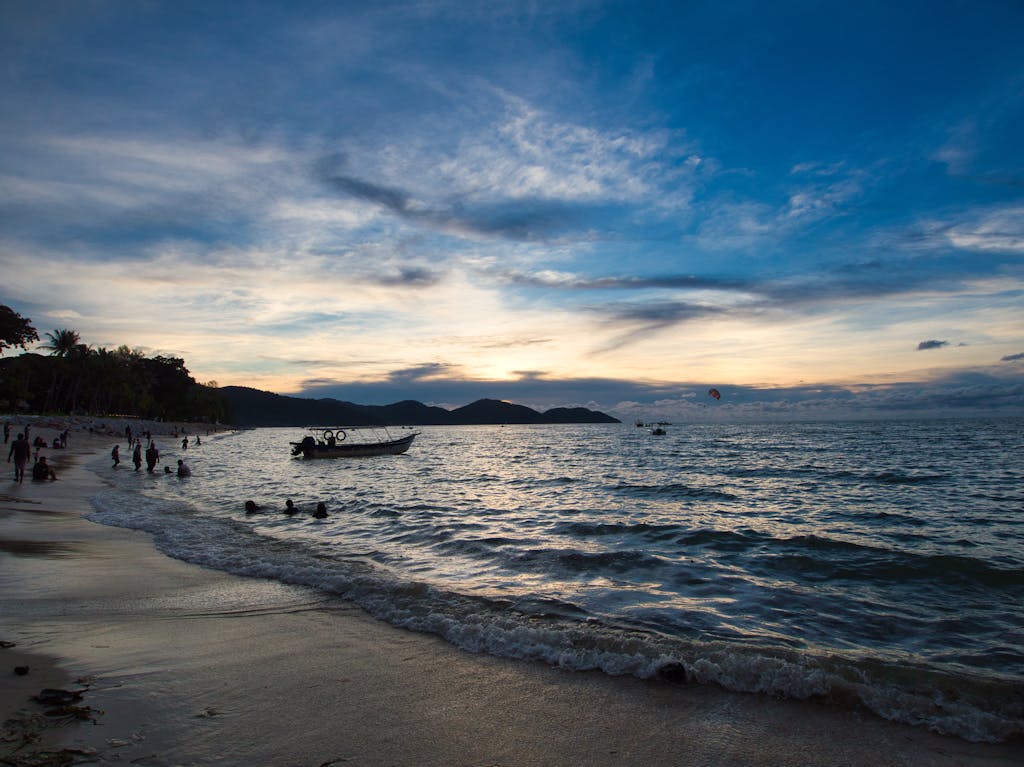
Photo by Roslan R @pexelsphoto
Honest take: The beach is fine—not pristine, not turquoise. Water clarity okay, sand decent. More “escape city heat” than “Maldives alternative.”
Good for:- Parasailing, jet-skiing, banana boats
- Resort pools (many resorts have nice pools even if beach isn’t perfect)
- Night market (Batu Ferringhi Night Market, 6 PM–midnight)—souvenirs, fake goods, street food
If you’re in Penang for beach, you picked the wrong destination. If you want a beach break while in Penang, Batu Ferringhi serves that purpose.
The quite reasons you’ll find your way back
This dream destination rewards repeat visits. First-timers hit famous murals, eat char kway teow, visit Blue Mansion. Second-timers discover neighborhood hawker stalls, lesser-known clan houses, Peranakan culture depth. Third-timers have favorite kopitiams, know which stall makes the best laksa, understand that Penang isn’t a weekend—it’s a lifestyle study.
Penang becomes less a destination and more a standard—for how cities should preserve heritage, for how street food should taste, for what “multicultural” actually looks like when it works.
Because Penang, Malaysia is:
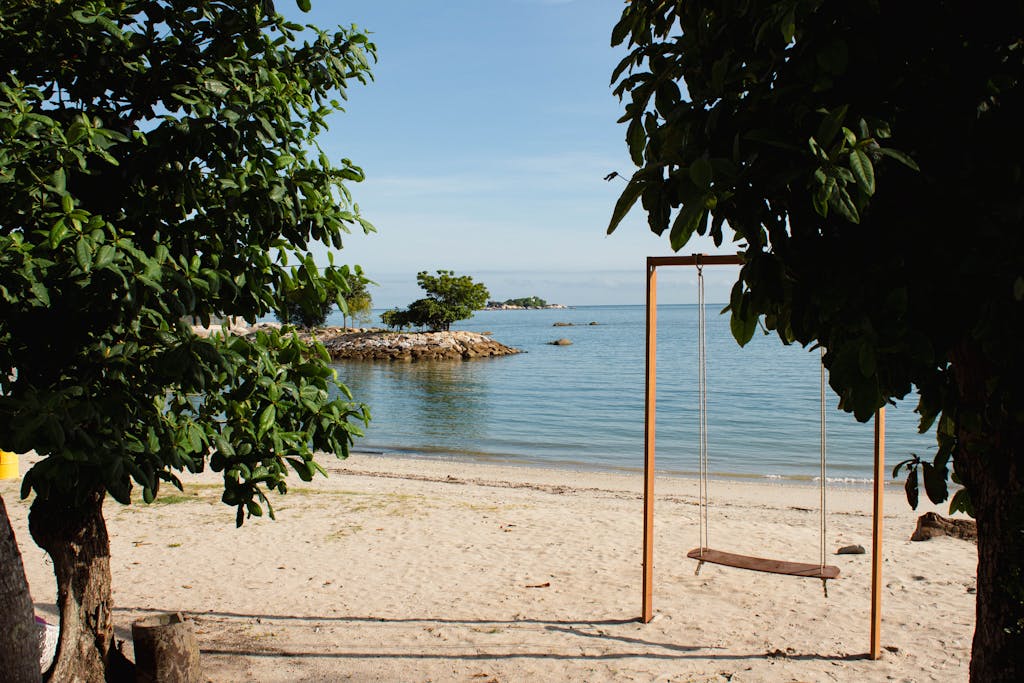
Photo by Mimi @pexelsphoto
- Food pilgrimage site—some of Southeast Asia’s best hawker food, RM7 dishes that haunt you for years
- Heritage done right—UNESCO status that didn’t kill the city, preservation + progress coexisting
- Walkable, human-scale—you can see George Town on foot, no car needed
- Culturally layered—Chinese + Malay + Indian + Peranakan + British, all visible, all functioning
- Affordable luxury—stay in colonial mansions converted to boutique hotels for prices that would get you a chain hotel elsewhere
- Still real—locals live here, work here, eat the same hawker food tourists chase
What this place whispers to your heart – the emotional promise
You’ll eat char kway teow at a street stall that’s been on the same corner for 40 years and understand why Singaporeans cry about “the good old days.” You’ll walk through George Town at golden hour, light filtering through shophouse five-foot-ways, and shoot 200 photos without trying. You’ll watch a Chinese funeral procession pass a Hindu temple while Muslims pray at the mosque next door, and realize: this is what “harmony” actually looks like.
Penang won’t transform you.
But it’ll show you what cities could be—if they chose character over efficiency, preservation over demolition, hawker stalls over air-conditioned food courts. And once you’ve lived that—even for three days—you’ll judge every other city by that standard.
This is the kind of place you bring:
- Your appetite when you’re ready for food that will ruin other cities for you
- Your camera for shophouses, murals, five-foot-way shadows, textured walls
- Your walking shoes for hours of aimless wandering through heritage streets
- Your curiosity about how preservation and progress can coexist
- Yourself when you need a city that’s comfortable being itself—not performing modernity, not frozen in nostalgia, just… living
What follows you home – after you leave
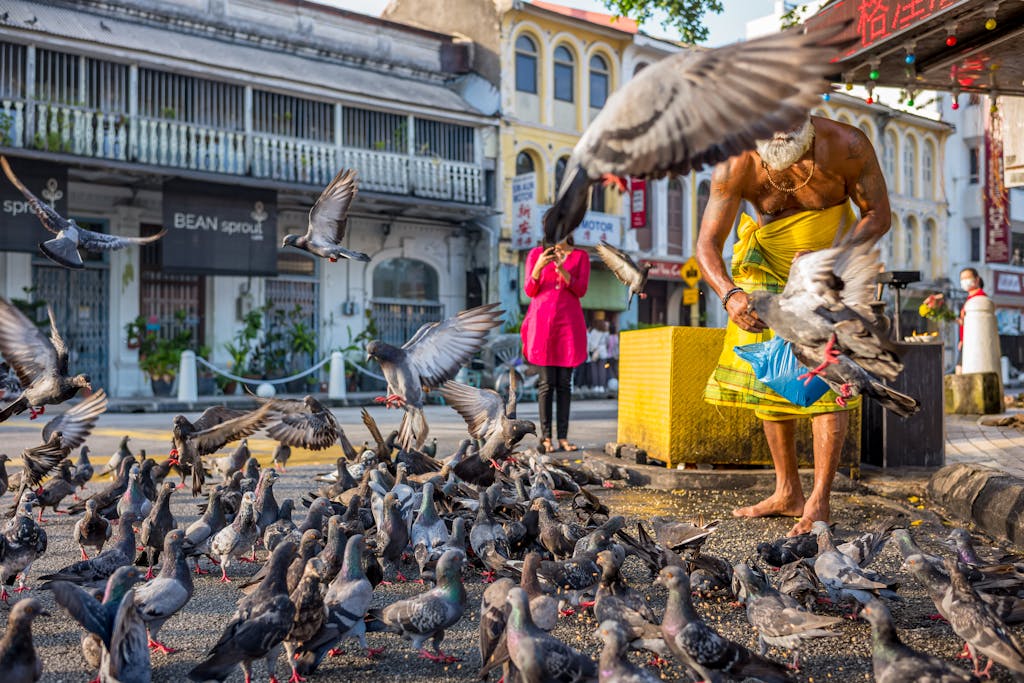
Photo by jefe king @pexelsphoto
Nothing will measure up.
You’ll see cities demolishing heritage buildings and think: “Penang kept theirs.” You’ll eat “street food” in sanitized food courts and miss plastic stools and open air. You’ll watch cities try to “preserve character” by building fake heritage districts and know: Penang did it for real.
Some people leave and immediately plan the return trip—longer stay, deeper food exploration, maybe a month. Some people leave and start researching Ipoh, Melaka, George Town’s sister UNESCO cities. Some people leave and move there—digital nomads, retirees, people who realize affordable heritage living exists.
All three are valid.
What matters is this: you saw what happens when a city chooses preservation—and wins. Not as a museum. Not as performance. As a living, breathing, eating, functioning city.
And once you’ve tasted that—once you’ve walked those streets, eaten that food, seen architecture that’s used instead of just preserved—you can’t accept cities that gave up their souls for glass towers.
Penang proved it’s possible. And that proof changes everything.
How long you can linger, and what it really cost
⌛Time:
- 2D1N minimum—hit George Town highlights, eat well, rushed
- 3D2N ideal—proper food tour, street art hunt, temples, Penang Hill, relaxed
- 4D3N to 5D4N—adds beach day, deeper food exploration, day trips (Balik Pulau countryside), cooking class
- 1 week+—digital nomad trial, live like a local, explore every hawker stall
💸Budget Range:
- Budget: RM100–200/day ($22–44)
- Hostel (RM30–60/night, $7–13), street food only (RM30–50/day, $7–11), walking/buses, free temples/street art, calculated hawker splurges
- Comfortable: RM300–500/day ($66–110)
- 3-star boutique hotel (RM150–300/night, $33–66), mix hawker + restaurant meals (RM100–150/day, $22–33), Grab rides, paid sites (Blue Mansion, Penang Hill), massage, shopping buffer
- Heritage Luxury: RM700+/day ($154+)
- Boutique heritage hotel (RM400–800+/night, $88–176+)—Blue Mansion, Seven Terraces, Eastern & Oriental Hotel, fine dining + hawker food, spa, private tours, cooking class, zero stress
🧳Penang is affordable—street food is cheap, heritage hotels surprisingly reasonable, walking is free and rewarding.
🎨If Penang feels like the Malaysia you needed, your next chapter might be ⤵️
The Dream Map Travel Destinations grows one story at a time.
It’s a collection of lived moments—routes taken on a whim, places that surprised you, detours that turned into stories worth keeping.
Every Dream Map travel destinations exists because someone went first.
If you’ve been there—
reached a place you didn’t expect to love
discovered a route that felt smoother than advertised
stayed longer than planned because the place earned it.
share it below.
Your experience doesn’t have to be perfect. It just has to be real.
What you add helps future travelers imagine better, plan smarter, and arrive with context instead of fantasy.
Dream Map travel destinations grows one story at a time—quietly, collectively, and with intention
This page evolves with shared experiences. Verified patterns are folded back into the map over time.
MappedAtlas improves with commuter reports. If you find outdated routes, changed timetables, or new paths, send a quick update.
Last updated: April 2026