Dream Destination: Shirakawa-go / Gokayama, Japan — When You Need to See What Winter Looks Like When It Wins
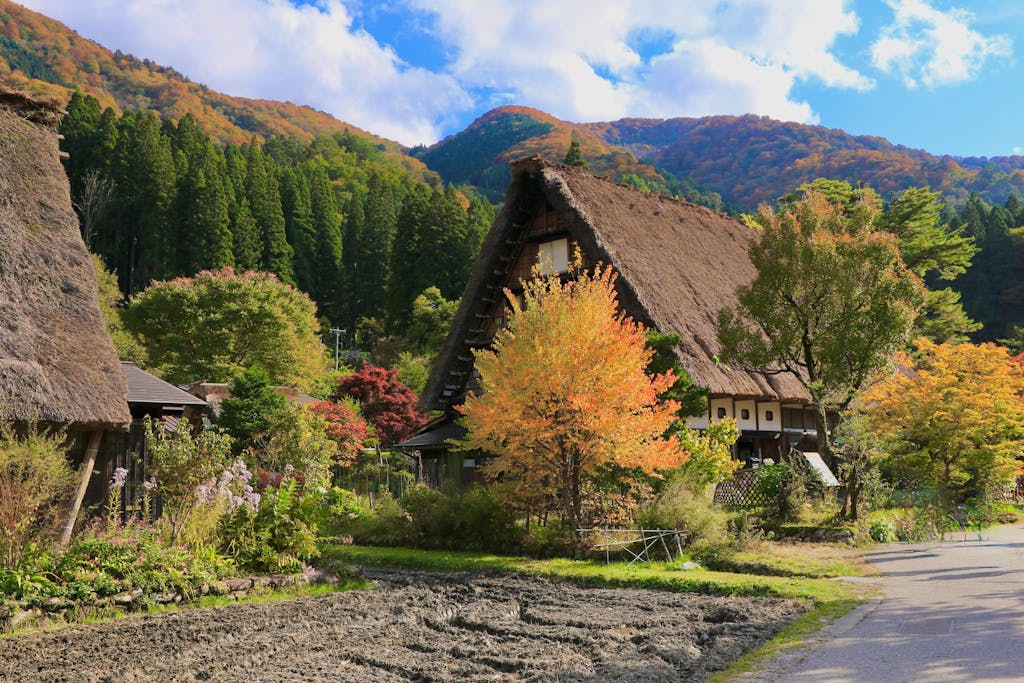
Photo by Masaharu Inagaki @pexelsphoto
Shirakawa-go and Gokayama Japan tour are what happens when you’ve been living in a world optimized for speed and efficiency—and you need to stand in front of something that chose survival over progress and won.
- This dream destination is a cluster of mountain villages in the Japanese Alps where traditional gassho-zukuri farmhouses—thatched-roof structures with hands-in-prayer steep angles—have stood for 250+ years, surviving earthquakes, fires, modernity, and winters so brutal they bury everything under six meters of snow.
- Shirakawa-go (Gifu Prefecture) is the larger, more famous village—110+ gassho houses, UNESCO World Heritage status since 1995, the postcard image of Japan’s rural past.
- Gokayama (Toyama Prefecture)—specifically Ainokura and Suganuma hamlets—is smaller, quieter, less visited, and somehow even more atmospheric because of it.
- These villages exist in defiance of logic. Isolated by mountains. Buried by snow half the year. Built with wood and thatch in a country famous for earthquakes and fire. And yet—they endure.
- You don’t come to Shirakawa-go and Gokayama for adventure or adrenaline. You come because you need to see what happens when a community decides: we’re staying, no matter what.
- You come because you need proof that slow, traditional, and difficult can still survive in a world obsessed with fast, modern, and easy.
- And you come—if you’re honest—because you need to see these villages under snow, lit up at night during winter illumination events, looking like something out of a fairy tale that somehow, impossibly, turned real.
Shirakawa-go and Gokayama aren’t museums. People still live here. Farm here. Raise children here. Run guesthouses where you sleep on tatami and wake to snow silence.
This is living history—not performed, but lived.
⚠️ Essentials for Tourist: Visa-free | 90 days | Strict; no extensions | Biometrics on arrival l IC card at station. For the most official and up-to-date document forms, you should download them from the Ministry of Foreign Affairs of Japan websites.
For the ones who feel the pull – this Shirakawa-go and Gokayama Japan tour is your RESET
If you need nightlife, shopping, or constant stimulation, Shirakawa-go will bore you.
If you need to stand in front of 250-year-old farmhouses in January, snow falling, smoke curling from chimneys, and feel time collapse—this is where you come.
This dream destination was built for:
- Travelers who want to see traditional Japan that’s still functioning, not just preserved
- Winter lovers ready for snow so deep it changes how you understand “buried”
- Photographers chasing the iconic shot: gassho houses under snow, illuminated at night, smoke rising from thatched roofs
- Solo wanderers who need villages small enough to walk in an hour but layered enough to stay for days
- Anyone tired of cities and theme parks who needs Japan’s quiet, rural, unrushed side
- People who understand that some places are worth visiting because they’re hard to reach
When the world finally exhales, what it feels like
SHIRAKAWA-GO (The Iconic Village)
ou arrive by bus from Kanazawa (1.5 hours), Takayama (50 minutes), or Nagoya (2.5 hours). The road winds through mountain passes, tunnels, and valleys that feel increasingly remote.
Then you round a bend and see it: Ogimachi Village—a cluster of gassho houses in a river valley, mountains rising on all sides, everything dusted with snow (if you came in winter).
Winter (December–February):
- Mornings smell like wood smoke and cold.
- You step out of your guesthouse (you’re staying in a gassho-zukuri farmhouse converted to a minshuku) and the world is white. Snow on roofs. Snow on fields. Snow falling softly, endlessly, like the sky is still deciding whether to stop.
- The roofs—those impossibly steep thatched roofs—are designed for this. Snow slides off. Accumulation is managed. The angle (60 degrees) is structural wisdom earned over centuries of survival.
- You walk through the village. The main street has a few cafés, souvenir shops, the Wada House (largest gassho structure, open to tour), the Outdoor Museum where you can enter farmhouses and see how life was lived.
- But the magic isn’t in the attractions. It’s in the atmosphere.
- Afternoons in Shirakawa-go in winter are quiet in a way cities never are. You walk across the suspension bridge over the Sho River. You climb to Shiroyama Viewpoint—a 10-minute hike up to a platform overlooking the entire village. And from here, you see it: the layout, the roofs like praying hands, the smoke, the snow, the mountains.
- You take the photo everyone takes. And it still hits.
Winter Illumination Events (January–February, select evenings):
- A few nights each year, the village lights up—spotlights on gassho roofs, snow falling, the scene so surreal it looks CGI.
- You stand at the viewpoint with hundreds of other pilgrims (reservation required for illumination nights—they’re extremely popular). You watch the lights click on. You hear the collective gasp.
- It’s touristy. It’s crowded. It’s also—undeniably—magic.
Spring (April–May):
- Snow melts. Rice fields flood and reflect the houses. Cherry blossoms frame the gassho roofs. The valley turns green and gentle.
Autumn (October–November):
- Maples explode into crimson and gold. The thatched roofs glow amber in afternoon light. Harvest season. The village feels abundant.
- Evenings are simple. You eat dinner at your guesthouse—hoba miso (miso grilled on magnolia leaves), river fish, mountain vegetables, rice. You bathe in a wooden tub. You sleep under thick futons on tatami floors.
- Nights here are silent except for the river and, in winter, the occasional soft sound of snow sliding off a roof.
Shirakawa-go doesn’t perform tradition. It just is traditional—and you’re allowed to witness it.
GOKAYAMA Japan Tour: AINOKURA & SUGANUMA (The Quieter Villages)
Less than an hour from Shirakawa-go, but a world away in crowd density.
- Ainokura — 20 gassho houses, population under 60, a village so small you walk it in fifteen minutes and feel like you’re intruding on someone’s life—because you are, and they’re gracious about it.
- You stay at a guesthouse here and the experience is intimate. Dinner with the family. Conversations in broken English or enthusiastic gestures. Stories about winters when the village was completely cut off for weeks.
- You walk the lanes. You see working farms—not museums. You hear roosters, see vegetable gardens, smell wood smoke from actual hearths, not decorative ones.
- Suganuma — Even smaller. 9 gassho houses. A small museum. A sense that tourism here is incidental, not structural.
- You visit on a weekday and you might be the only tourist.
Gokayama is what Shirakawa-go was before the crowds—and that quietness, that lack of performance, that feeling of discovering instead of consuming—is exactly why some travelers prefer it.
The quite reasons you’ll find your way back
This dream destination doesn’t change for trends. The villages are the same as they were 100 years ago—structurally, functionally, spiritually.
Shirakawa-go becomes a reference point for what “preserved” should mean—not frozen in time as a museum, but living in time as a community.
Because Shirakawa-go and Gokayama, Japan are:
- Living history that hasn’t been Disneyfied — people still farm, live, raise families here
- Visually iconic — the winter illumination shot is bucket-list, but even without it, the villages stun
- Seasonal shape-shifters — snow, cherry blossoms, green rice fields, autumn maples—each season rewrites the mood
- Proof that traditional can survive — in a country racing toward the future, these villages chose to stay put
- Quiet in a way cities can’t replicate — mountain silence, snow silence, the kind that makes you whisper
People return to Shirakawa-go and Gokayama because
- They saw photos and need to stand in front of the real thing
- They came in summer and need to see it under snow
- They visited on a day trip and regret not staying overnight
- They need to remember that slow, difficult, and traditional can still win
What this place whispers to your heart – the emotional promise
You’ll stand at Shiroyama Viewpoint in January, snow falling, village below lit by amber windows, and you’ll cry without knowing exactly why. You’ll sleep in a 250-year-old farmhouse and wake to silence so complete you hear your own heartbeat. You’ll eat breakfast with a host family who’s been running this guesthouse for three generations and realize: this is what “home” used to mean.
Shirakawa-go and Gokayama won’t transform you.
But they’ll show you what happens when a community decides to survive on its own terms—no compromise, no modernization for modernization’s sake, just endurance rooted in place.
And in a world that tells you to move, optimize, upgrade, discard—that stubbornness becomes radical.
This is the kind of place you bring:
- Your exhaustion with modernity when you need proof that older doesn’t mean worse
- Your camera when you need landscapes that look impossible but are real
- Your parents or grandparents when you want to show them Japan that feels familiar, not alien
- Yourself in winter when you need to be buried under snow and feel the world go quiet
- Your questions about survival when you need to see what resilience looks like when it’s structural, not just personal
What follows you home – after you leave
You’ll leave Shirakawa-go and Gokayama, Japan and return to cities—Kanazawa, Takayama, Tokyo—and the contrast will be violent.
Not bad. Just… jarring.
- You’ll remember: what six meters of snow looks like. What 250-year-old wood smells like. What dinner tastes like when it’s cooked by someone who’s been cooking the same dishes for forty years.
- Some people leave and immediately start researching other gassho villages—there are smaller, less-visited clusters scattered through the region. Some people leave and realize they needed the slowness to appreciate the speed again. Some people leave and carry Shirakawa-go as proof that some things are worth protecting—even when it’s expensive, difficult, and inefficient.
- All three are valid.
What matters is this: you stood in front of survival.
Not dramatic survival. Not crisis survival. Just quiet, stubborn, generational survival—the kind that says “we’re staying” and means it for 250 years.
And in a world obsessed with disruption and reinvention, that steadiness becomes its own form of rebellion.
How long you can linger, and what it really cost
⌛Time:
- Day trip — possible from Kanazawa or Takayama, but rushed
- 1 night — ideal for Shirakawa-go, allows evening/morning atmosphere, guesthouse stay
- 2D1N — comfortable pace, adds Gokayama, deeper immersion
- 3D2N — splits time between villages, includes illumination event (winter), hiking or cultural workshops
💸Budget Range:
- Day trip: $80–$150 USD per person
- Bus from Kanazawa or Takayama (¥2,500–4,500/$17–30 round-trip), lunch, museum entries (¥600/$4), snacks, limited time
- Budget overnight: $150–$300 USD per person
- Bus transport, budget guesthouse (¥8,000–10,000/$53–67 per person with meals), museum visits, walking only
- Comfortable stay: $350–$600 USD per person
- Private transport or rental car, mid-range minshuku or traditional gassho guesthouse (¥12,000–18,000/$80–120 per person with meals), Gokayama side trip, local food specialties, souvenir buffer
- Winter illumination package: $400–$700+ USD per person
- Illumination event reservation (required, limited slots), premium guesthouse, guided transport, meals, cold-weather gear, photography time
🧳Shirakawa-go guesthouse stays are pricier than standard Japan accommodations—but you’re sleeping in a 250-year-old farmhouse under a thatched roof. The price reflects preservation, tradition, and the cost of maintaining these structures.
🏖️ If Shirakawa-go and Gokayama feel like the Japan you’ve been missing, your next chapter might be ⤵️
The Dream Map Travel Destinations grows one story at a time.
It’s a collection of lived moments—routes taken on a whim, places that surprised you, detours that turned into stories worth keeping.
Every Dream Map travel destinations exists because someone went first.
If you’ve been there—
reached a place you didn’t expect to love
discovered a route that felt smoother than advertised
stayed longer than planned because the place earned it.
share it below.
Your experience doesn’t have to be perfect. It just has to be real.
What you add helps future travelers imagine better, plan smarter, and arrive with context instead of fantasy.
Dream Map travel destinations grows one story at a time—quietly, collectively, and with intention
This page evolves with shared experiences. Verified patterns are folded back into the map over time.
MappedAtlas improves with commuter reports. If you find outdated routes, changed timetables, or new paths, send a quick update.
Last updated: March 2026