Dream Destination: Japanese Alps (Kamikochi, Tateyama) — When You Need Mountains That Still Remember What Silence Means
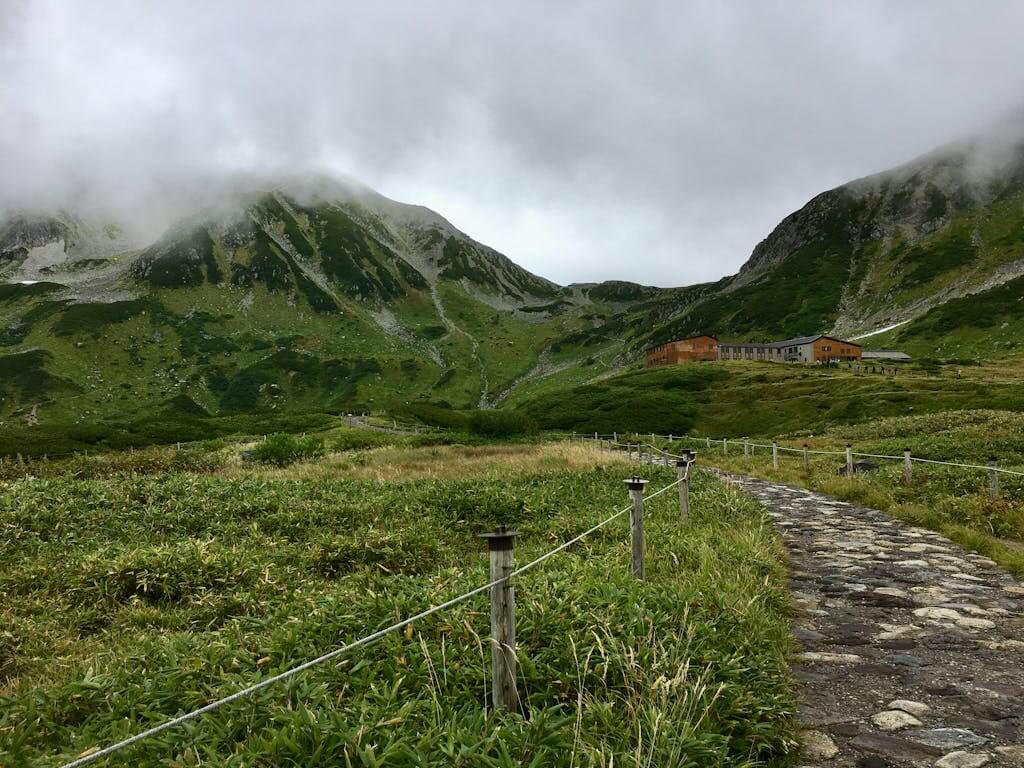
Photo by Miwa @pexelsphoto
This Japanese Alps tour happens when you’ve done Kyoto’s temples and Tokyo’s neon and you realize: Japan has a third face—and it’s carved in snow, stone, and sky.
Three mountain ranges cut through central Honshu like a spine: the Northern Alps (Hida), Central Alps (Kiso), and Southern Alps (Akaishi). Together they form the “Roof of Japan”—peaks over 3,000 meters, glacial valleys, alpine meadows, rivers so clear you see individual stones at six feet deep
- This dream destination exists in a Japan most foreigners never see—the Japan where monks walked pilgrimage routes for centuries before bullet trains, where mountain worship predates Buddhism, where villages still get buried under six meters of snow each winter and emerge in spring like something thawed from time itself.
- Kamikochi is the gateway to the Northern Alps—a pristine valley at 1,500 meters, car-free, protected as a national treasure. Crystal rivers fed by snowmelt. Suspension bridges framing mountain walls. Trails that lead deeper into wilderness where bears still outnumber humans.
- Tateyama is the spiritual anchor—one of Japan’s three sacred mountains (along with Fuji and Hakusan), a pilgrimage site where the “Alpine Route” cuts through snow walls 20 meters high each spring, where volcanic peaks still steam, where the line between tourism and worship blurs completely.
- You don’t stumble into the Japanese Alps. You plan for them. You commit to them. You accept that access is seasonal, that weather controls everything, that the mountains set the terms—not you.
- And once you arrive, once you step into Kamikochi or ride the cable cars through Tateyama’s snow corridor, once you breathe air so clean it hurts—you understand why the Japanese have been calling these mountains kami (divine) for over a thousand years.
The Japanese Alps aren’t just beautiful. They’re sacred—in the old sense, the pre-Instagram sense, the kind that makes you whisper without knowing why
⚠️ Essentials for Tourist: Visa-free | 90 days | Strict; no extensions | Biometrics on arrival l IC card at station. For the most official and up-to-date document forms, you should download them from the Ministry of Foreign Affairs of Japan websites.
For the ones who feel the pull – this Kamikochi, Tateyama Japanese Alps tour is your SOLITUDE
If you need cities, nightlife, or easy access, the Japanese Alps will frustrate you.
If you need mountains that demand effort but reward it with landscapes that short-circuit language—this is where you come.
This dream destination was built for:
- Hikers who want alpine trails without the Everest crowds or Patagonia logistics
- Nature lovers who’ve realized Japan has more than cherry blossoms and shrines
- Photographers chasing mountain light, autumn colors that set forests on fire, snow walls in April
- Spiritual seekers who understand that mountains are temples without roofs
- Travelers who’ve done the “Golden Route” (Tokyo-Kyoto-Osaka) and need Japan’s wild side
- Anyone tired of crowds, concrete, and constant stimulation who needs enforced quiet
When the world finally exhales, what it feels like
Kamikochi (The Valley That Time Protects)
April-November only (closed in winter due to snow)
- You arrive by bus from Matsumoto or Takayama—private cars banned to preserve the valley. The road winds through tunnels, climbs mountain passes, and suddenly: Kamikochi.
- Mornings smell like pine resin, river mist, and something indefinably clean.
- You step off the bus at Kappa Bridge—a wooden suspension bridge over the Azusa River, water so turquoise it looks dyed. Behind it: Hotaka Range—jagged granite peaks still snow-capped even in summer. You stand there breathing, and the only sounds are: river, wind, birdsong.
- No car engines. No motorbikes. No urban hum you didn’t realize you’d been carrying.
- Afternoons in Kamikochi are for walking:
Taisho Pond — A lake created by a volcanic eruption in 1915, dead trees still standing in water like skeletal monuments, Mount Yakedake (an active volcano) smoking faintly behind it.
Myojin Pond — Deeper into the valley, 90 minutes from Kappa Bridge, where a small Shinto shrine sits beside sacred ponds. You pay ¥300 to enter. You light incense. You sit in silence. Pilgrims have been doing this for centuries.
Day hikes to higher valleys: Trails lead to Tokusawa, Yokoo, and beyond—each step taking you deeper into alpine wilderness where you might see Japanese macaques, serow (goat-antelopes), or if you’re extremely lucky/unlucky, Asiatic black bears.
Evenings are gentle. You stay in a mountain lodge—simple, traditional, communal dinners of rice, miso, grilled fish, pickles. You soak in onsen fed by mountain springs. You sleep early because there’s nothing else to do, and that absence of options feels like freedom.
Nights here are dark. Stars so bright they feel three-dimensional. The river continues its endless conversation with the rocks.
Kamikochi doesn’t entertain you. It just exists, perfectly, and lets you witness.
Tateyama Kurobe Alpine Route –The Pilgrimage Through Snow
Mid-April to late November (The “Snow Corridor” is April-June)
- This isn’t a hike. It’s a journey through multiple transportation modes—cable cars, ropeways, buses, trolleys—stitching together a traverse from Tateyama Station (Toyama side) to Ogizawa (Nagano side), or vice versa.
- You start early. The route takes 6–8 hours one-way, not because of distance, but because you stop constantly, stunned.
Bijodaira (977m) — Cedar forest, humid, mossy, primordial. You switch to a bus that climbs higher.
Murodo (2,450m) — The highest point accessible by public transport. You step off the bus in April and the world is white. Snow walls 10–20 meters high line the road—bulldozed corridors through accumulation so deep it takes months to clear. Tourists walk between the walls like ants in a trench. You touch snow in late April and feel winter compressed into architecture.
Beyond the snow corridor: Mikurigaike Pond, emerald-green, still partially frozen. Mount Tateyama rising behind it—sacred, formidable, watching. Hikers summit from here (6–8 hour round trip, serious alpine gear required).
Daikanbo (2,316m) — You take a tunnel trolley through the mountain, then a ropeway (one of the longest single-span ropeways in Japan) that hangs you above the Kurobe Dam and alpine valleys so steep they look vertical.
Kurobe Dam — Japan’s tallest dam, 186 meters, completed in 1963 after a brutal construction that killed 171 workers. The dam release in summer sends water exploding into the gorge—a reminder that even in Japan’s controlled nature, power remains raw.
Afternoons blur into continuous transition—each cable car, each bus, each viewpoint showing you a different layer of the Japanese Alps: volcanic peaks, hanging valleys, glacial lakes, forests so dense they block the sun.
Evenings find you on the other side—either in Ogizawa (Nagano) or back in Toyama—exhausted, overstimulated, quiet.
You’ve crossed the mountains not by walking over them, but by threading through them—a modern pilgrimage built on engineering and reverence in equal measure.
The quite reasons you’ll find your way back
This dream destination doesn’t market itself internationally. It doesn’t need to.
The Japanese have been coming here for generations—hiking, praying, healing—and that domestic reverence has protected these mountains from the fate of over-touristed sites elsewhere.
People return to the Japanese Alps because once you’ve walked through Kamikochi’s valley, once you’ve stood in Tateyama’s snow corridor, once you’ve summited a 3,000-meter peak and looked across an ocean of ridgelines—you realize:
Japan isn’t just temples and trains. Japan is this—stone and snow and silence that predates civilization.
Because the Japanese Alps are:
- Japan’s best-kept secret from foreign tourists — 90% of visitors are domestic; you’ll be one of few Westerners
- Accessible wilderness — no technical climbing required for most trails, but still genuinely wild
- Seasonally dramatic — spring snow walls, summer alpine flowers, autumn colors that redefine “fall foliage,” winter pilgrimage closures
- Spiritually layered — these mountains were sacred before tourism, and that reverence remains structural
- Proof that Japan is more than cities — this is the counterweight to Tokyo, the exhale after Osaka
What this place whispers to your heart – the emotional promise
You’ll stand at Kappa Bridge watching the Azusa River and realize you haven’t thought about email in three hours. You’ll walk through Tateyama’s snow walls and laugh because the scale is so absurd it breaks seriousness. You’ll summit Mount Yari (if you’re brave) and see the entire spine of Japan stretched before you.
The Japanese Alps won’t fix your life.
But they’ll show you what Japan looks like when humans stop being the main character—when mountains, rivers, forests, and snow dictate the terms, and we’re just grateful to be allowed in.
This is the kind of place you bring:
- Your overstimulated nervous system when you need nature so quiet your thoughts finally slow
- Your hiking boots when you’re ready for Japan beyond the Golden Route
- Your camera when you need landscapes that don’t fit in phone screens
- Your spiritual confusion when you need mountains that are sacred without demanding belief
- Yourself when you’re tired of performing and need permission to just… walk
What follows you home – after you leave
You’ll return to Tokyo or Kyoto, and the cities will feel like a different country.
Not worse. Just… different.
- You’ll remember: what air tastes like at 2,500 meters. What silence sounds like without car engines. What it feels like to walk for six hours and see maybe twelve other people.
- Some people leave the Japanese Alps and immediately book the next mountain trip—Mount Koya, Kumano Kodo, Hokkaido’s Daisetsuzan. Some people leave and realize they needed the wilderness to appreciate the cities again. Some people leave and carry Kamikochi or Tateyama as proof that Japan still has places where the modern world hasn’t flattened the sacred.
All three are valid.
What matters is this: you saw the other Japan.
The one that exists when bullet trains stop running, when convenience stores disappear, when the mountains take over.
And once you’ve seen it, the Golden Route feels incomplete without it.
How long you can linger, and what it really cost
⌛Time:
- Kamikochi:
- 2D1N minimum — valley floor walks, Myojin Pond, mountain lodge stay
- 3D2N ideal — adds day hikes to Tokusawa or Yokoo, proper immersion
- 4D3N+ — serious hiking to Yarigatake or Hotakadake (technical alpine routes)
- Tateyama Alpine Route:
- 1 day — full traverse, intense, exhausting, unforgettable
- 2D1N — overnight at Murodo, allows for summit attempt or deeper exploration
💸Budget Range:
- Budget trip (Kamikochi): $250–$450 USD per person
- Train/bus to Matsumoto + bus to Kamikochi (¥3,500/$23), mountain hut dormitory (¥8,000–10,000/$53–67 with meals), packed lunches, hiking only, public transport
- Comfortable trip (Kamikochi): $500–$800 USD per person
- Private transport options, mountain lodge private room (¥12,000–18,000/$80–120 with meals), better food, gear rental, guided hikes
- Tateyama Alpine Route (one-way): $200–$350 USD per person
- Route ticket (¥9,800/$65 for full traverse), meals and snacks en route, overnight in Toyama/Nagano
- Combined Alps journey: $800–$1,500+ USD per person
- Multi-day itinerary, Kamikochi + Tateyama + side trips, mountain lodges, JR Pass, meals, flexibility for weather
🧳The Japanese Alps aren’t cheap—mountain lodges cost more than city hotels, transport is fixed-price, and remoteness adds premiums. But you’re paying for preservation, not profit.
🏔️If the Japanese Alps feel like the Japan you’ve been missing, your next chapter might be ⤵️
The Dream Map Travel Destinations grows one story at a time.
It’s a collection of lived moments—routes taken on a whim, places that surprised you, detours that turned into stories worth keeping.
Every Dream Map travel destinations exists because someone went first.
If you’ve been there—
reached a place you didn’t expect to love
discovered a route that felt smoother than advertised
stayed longer than planned because the place earned it.
share it below.
Your experience doesn’t have to be perfect. It just has to be real.
What you add helps future travelers imagine better, plan smarter, and arrive with context instead of fantasy.
Dream Map travel destinations grows one story at a time—quietly, collectively, and with intention
This page evolves with shared experiences. Verified patterns are folded back into the map over time.
MappedAtlas improves with commuter reports. If you find outdated routes, changed timetables, or new paths, send a quick update.
Last updated: March 2026