Dream Destination: Hiroshima, Japan — When You’re Ready to Witness What Survival Looks Like After the Unthinkable
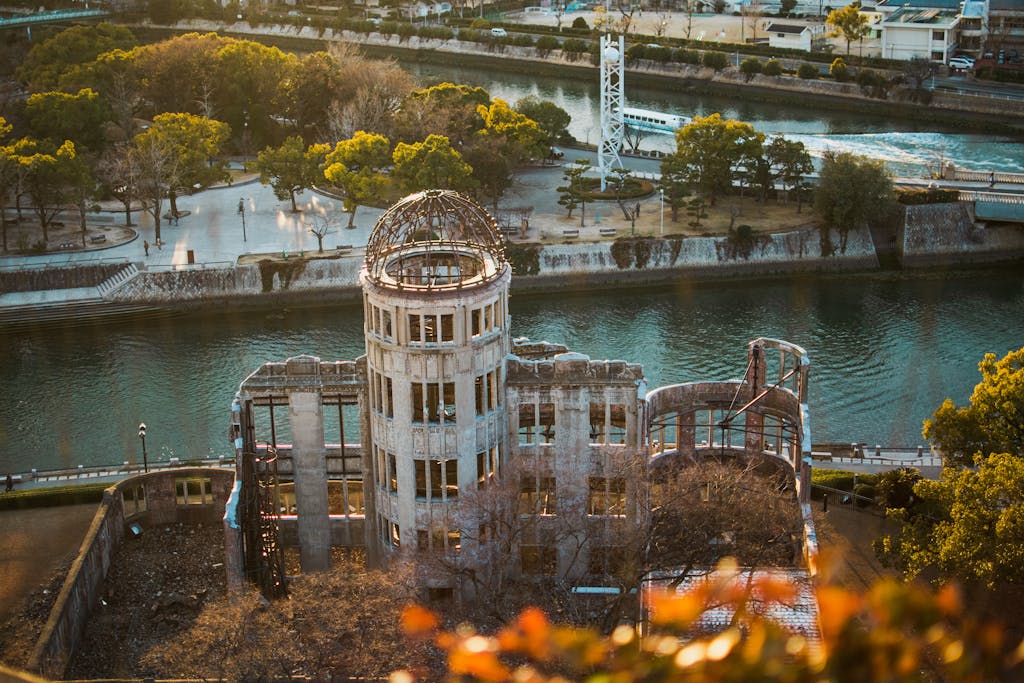
Photo by Hoi Wai @pexelsphoto
Hiroshima Japan tour is not a comfortable destination.
And it shouldn’t be.
- This dream destination exists at the intersection of unfathomable horror and extraordinary resilience—the first city in human history to be destroyed by an atomic weapon, and the city that chose to rebuild anyway, to survive anyway, to become a living argument for peace instead of a monument to revenge.
- August 6, 1945, 8:15 AM. One bomb. 70,000 people vaporized instantly. Another 70,000 dead within months from radiation. A city flattened to ash and rubble in seconds.
- And then—impossibly—Hiroshima came back.
- Not just physically rebuilt, but rebuilt with intention. With a peace park at ground zero. With a museum that doesn’t sanitize or soften. With survivor testimonies that force you to look directly at what we did to each other. With a dome—the only structure left standing near the hypocenter—preserved exactly as it was on August 7, 1945, skeletal and haunting and undeniable.
- You don’t come to Hiroshima, Japan for a vacation. You come because you understand that some places demand to be witnessed.
- You arrive by Shinkansen (bullet train) from Tokyo, Osaka, or Kyoto—sleek, efficient, a testament to the country that rose from atomic ashes to become one of the most technologically advanced nations on Earth.
- You step off the train into a modern city. Clean streets. Functioning trams. People going to work, eating lunch, living lives. And for a moment, you might forget why you came.
- Then you walk to Peace Memorial Park. And you remember.
Hiroshima isn’t about feeling good. It’s about feeling responsible.
⚠️ Essentials for Tourist: Visa-free | 90 days | Strict; no extensions | Biometrics on arrival l IC card at station. For the most official and up-to-date document forms, you should download them from the Ministry of Foreign Affairs of Japan websites.
For the ones who feel the pull – this Hiroshima Japan tour is your HEALING
If you need easy, skip Hiroshima.
If you need to stand in front of the evidence of what we’re capable of—both destruction and survival—and let that reality reshape your understanding of peace, this is where you come.
This dream destination was built for:
- History students who need to understand atomic warfare beyond textbooks and documentaries
- Travelers who’ve realized that bearing witness is a form of respect
- Anyone grappling with questions about war, violence, nationalism, and what we owe the dead
- People ready to sit with discomfort instead of running from it
- Educators, journalists, writers, activists trying to understand how humanity moves forward after atrocity
- Humans who believe that the hardest stories are often the most necessary ones
When the world finally exhales, what it feels like
Mornings in this dream destination start quietly.
You wake up in a business hotel or traditional ryokan. The city outside is orderly, clean, efficient—everything Japan promises. You eat breakfast—miso soup, rice, grilled fish, pickles—and the normalcy feels strange when you know what you’re about to see.
You take the tram to Peace Memorial Park.
And then the weight lands
Afternoons in Hiroshima, Japan are when you confront what the war did:
The Atomic Bomb Dome (Genbaku Dome)
- You see it first. The skeletal remains of the Prefectural Industrial Promotion Hall, standing exactly as it was after the blast. The dome is gone. The walls are scorched. Twisted metal beams reach toward the sky like broken fingers. It’s the only structure left near the hypocenter because it was almost directly beneath the bomb—everything else was flattened horizontally.
- You stand in front of it and try to imagine what this building looked like at 8:14 AM on August 6, 1945. You can’t.
Hiroshima Peace Memorial Museum
- You walk through exhibits that don’t soften anything. Photographs of victims—burns so severe they barely look human. A watch stopped at 8:15. A child’s tricycle, melted. Shadows burned into stone—all that’s left of people vaporized by heat hotter than the surface of the sun. Testimonies from survivors (hibakusha) describing the immediate aftermath: the smell of burning flesh, the rivers choked with bodies, the radiation sickness that killed slowly and painfully for months.
- You read about Sadako Sasaki—a girl who was two when the bomb dropped, who survived, who developed leukemia at age eleven from radiation exposure, who folded 1,000 paper cranes hoping to survive, and who died anyway.
- You leave the museum hollow.
The Cenotaph and Peace Flame
- In the center of the park sits the Memorial Cenotaph, inscribed with the names of all known victims. Through its arch, you see the Peace Flame—burning continuously since 1964, and will burn until all nuclear weapons are abolished.
- Beyond the flame: the Atomic Bomb Dome.
- The sight line is intentional. Past. Present. Future.
- You sit on a bench. You try to process. You can’t. Not yet.
Evenings offer a different Hiroshima—the one that survived and rebuilt:
You walk through Hondori Shopping Arcade, vibrant and modern. You eat okonomiyaki (Hiroshima-style, layered not mixed)—noodles, cabbage, egg, pork, sauce, a meal so good it makes you feel guilty for enjoying it. You take the ferry to Miyajima Island if you have time, to see the floating torii gate of Itsukushima Shrine—beauty and spirituality just 30 minutes from ground zero.
Nights here are quiet. The city moves on because it has to. Survivors aged. Their children grew up. Life continued.
But the memory doesn’t fade.
Hiroshima, Japan forces you to hold both: the horror of what happened, and the resilience of what came after.
The quite reasons you’ll find your way back
Most people don’t return to Hiroshima, Japan. Not because it wasn’t meaningful. Because once is enough.
Once you’ve walked through the museum. Once you’ve stood in front of the dome. Once you’ve read the testimonies and seen the photographs and understood—not intellectually, but felt—what 70,000 deaths in a single second actually means. You carry it forever.
This dream destination doesn’t offer pleasure. It offers necessary pain. The kind that reshapes how you vote, how you think about conflict, how you understand the word “never again.”
But some people do return:
- Peace activists and educators bringing new groups
- Researchers and journalists documenting survivor stories before they’re gone
- People who realize that one visit wasn’t enough to process what they witnessed
What this place whispers to your heart – the emotional promise
You’ll stand in front of the Atomic Bomb Dome and feel the weight of what one decision, one weapon, one moment can do. You’ll read a child’s diary in the museum and cry in public and not care who sees. You’ll light incense at the cenotaph and realize that remembrance is an act, not a feeling.
Hiroshima won’t make you hopeful. But it will show you what survival looks like when it’s forced, not chosen. What rebuilding looks like when you have to. What peace looks like when it’s born from ash. And that knowledge—that heavy, uncomfortable, essential knowledge—is what you carry when you leave.
This is the kind of place you bring:
- Your privilege when you need to understand what it costs
- Your assumptions about war when you’re ready to have them dismantled
- Your children when they’re old enough to understand that history isn’t abstract
- Your citizenship when you need to reckon with what your country is capable of
- Your humanity when you need to be reminded that victims aren’t statistics—they’re people with names, faces, families, futures
What follows you home – after you leave
You’ll take the Shinkansen back to Kyoto or Tokyo, and the speed will feel obscene.
You’ll look out the window at modern Japan—bullet trains, vending machines, neon cities—and think: This country was bombed into rubble 79 years ago.
And something will shift.
Not solved. Not healed. Just… aware.
- You’ll read news about nuclear threats differently. You’ll hear political rhetoric about “necessary force” and remember the watch stopped at 8:15. You’ll vote differently, donate differently, speak differently—because you’ve seen what the word “acceptable casualties” actually means.
- Some people leave Hiroshima, Japan and become peace activists. Some people leave and change careers—educators, historians, human rights workers. Some people leave and just… carry it. Quietly. Let it inform everything without announcing it.
- All three are valid.
What matters is this: you bore witness.
And in a world that constantly tries to forget, to move on, to sanitize—witnessing becomes resistance.
How long you can linger, and what it really cost
⌛Time:
- 1 day minimum — Peace Park, museum, dome, okonomiyaki dinner
- 2D1N is ideal — adds Miyajima Island, time to process, deeper exploration
- 3D2N — if you want to attend survivor testimonies (when available), visit outer sites, and truly sit with it
💸Budget Range:
- Budget trip: $120–$200 USD per person (from Osaka/Kyoto)
- JR Pass or regular train, capsule hotel or hostel (¥3,000–5,000/$20–33/night), museum entry (¥200/$1.30), street food and budget restaurants, tram pass
- Comfortable trip: $300–$500 USD per person
- Shinkansen reserved seat, mid-range hotel (¥8,000–15,000/$53–100/night), museum and Miyajima, sit-down restaurants, ferry to island, proper okonomiyaki dinner, time and space to process
- Immersive trip: $600–$900+ USD
- First-class Shinkansen, traditional ryokan, private guide with historical context, survivor testimony session (if available), Miyajima overnight stay, donation to peace organizations, curated experiences
🧳Entry to the Hiroshima Peace Memorial Museum is ¥200 ($1.30). The emotional cost is incalculable
💥If Hiroshima feels like the confrontation you needed, your next chapter might be⤵️
The Dream Map Travel Destinations grows one story at a time.
It’s a collection of lived moments—routes taken on a whim, places that surprised you, detours that turned into stories worth keeping.
Every Dream Map travel destinations exists because someone went first.
If you’ve been there—
reached a place you didn’t expect to love
discovered a route that felt smoother than advertised
stayed longer than planned because the place earned it.
share it below.
Your experience doesn’t have to be perfect. It just has to be real.
What you add helps future travelers imagine better, plan smarter, and arrive with context instead of fantasy.
Dream Map travel destinations grows one story at a time—quietly, collectively, and with intention
This page evolves with shared experiences. Verified patterns are folded back into the map over time.
MappedAtlas improves with commuter reports. If you find outdated routes, changed timetables, or new paths, send a quick update.
Last updated: March 2026