Dream Destination: Raja Ampat, Indonesia — When You Need to See What the Ocean Looked Like Before We Broke It
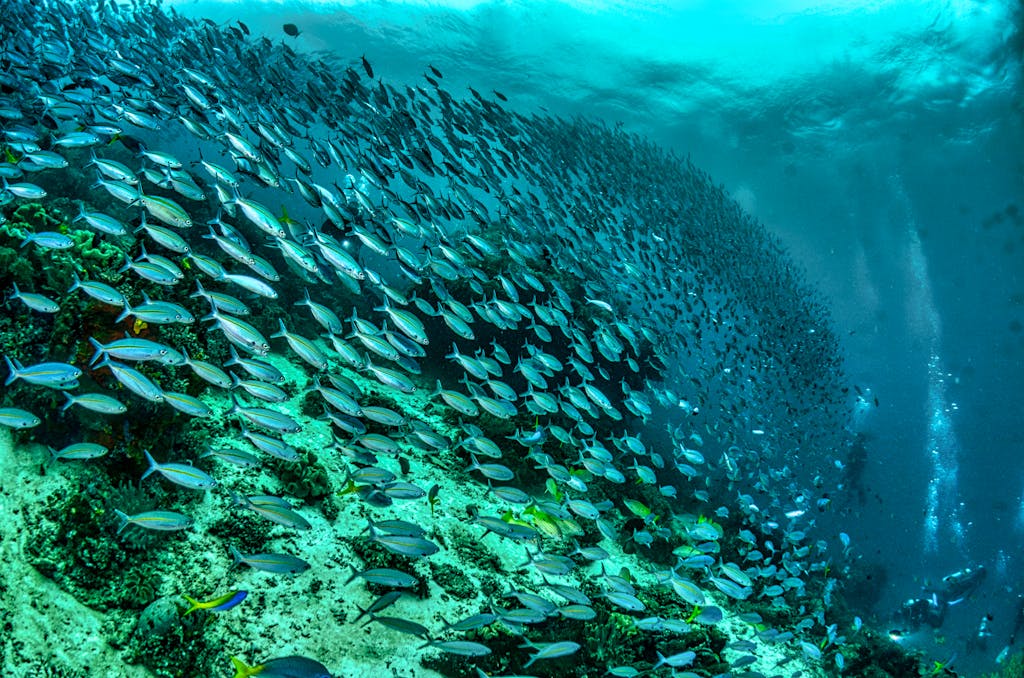
Photo by Tom Fisk @pexelsphoto
Raja Ampat Indonesia tour is not a destination. It’s a pilgrimage.
- This dream destination sits at the edge of the world’s most biodiverse marine ecosystem—the Coral Triangle—where 75% of all known coral species exist, where reefs explode in colors that make you question if your eyes are lying, where the water is so clear it feels like flying through liquid glass.
- Four main islands (Raja Ampat means “Four Kings”), 1,500 smaller ones, and roughly 40,000 square kilometers of the most pristine ocean left on Earth.
- This is not Bali. This is not even Komodo.
- Raja Ampat is what happens when you follow diving obsession to its logical conclusion—when you stop chasing “good reefs” and start chasing the reef, the one marine biologists cry about, the one that makes veteran divers go silent underwater because their brains can’t process that much life at once.
- You don’t stumble into Raja Ampat. You plan for it. Save for it. Fly to Jakarta, then Sorong (easternmost tip of the Bird’s Head Peninsula), then take a ferry or speedboat for 2–4 hours into the archipelago. You arrive exhausted, disoriented, and already aware: you’re no longer in tourist Indonesia.
- You’re in the Indonesia that exists when humans stop being the main character.
Raja Ampat, Indonesia is where you go when you’re ready to witness what the planet looked like before we commodified it—and what it could still be if we get out of the way.
⚠️Essentials for Tourist: eVOA | VOA ($35)extendable or visa-free (30 days) |[visa-online.imigrasi.go.id l https://visa-online.imigrasi.go.id
For the ones who feel the pull – this Raja Ampat Indonesia tour is your RESET
If you need nightlife, shopping, or easy logistics, Raja Ampat will frustrate you.
If you need to stand on a limestone karst island at sunset, surrounded by water so turquoise it looks Photoshopped, and know that you’re looking at the healthiest reef system on the planet—this is where you come.
This dream destination was built for:
- Divers who’ve run out of reefs that impress them and need the biological equivalent of a cathedral
- Underwater photographers chasing shots that redefine “impossible”
- Marine biology nerds who want to see textbook species in the wild
- Adventurers who understand that remoteness is a feature, not a bug
- Travelers who’ve done the accessible destinations and need something that demands sacrifice—time, money, comfort, convenience
- People ready to admit that sometimes the best experiences cost more and require more, and that’s not elitism—it’s ecology
When the world finally exhales, what it feels like
Mornings in this dream destination start on water.
You wake up on a liveaboard, or in an overwater bungalow, or in a homestay on a stilted platform above the sea. The first sound you hear is water lapping against wood. The first thing you see through the window is karst limestone islands rising from mirror-calm ocean like something out of a dream you had as a child.
You drink coffee on deck. The sunrise is pink and gold and absurdly beautiful. You gear up for the first dive of the day.
Afternoons in Raja Ampat, Indonesia are when your understanding of “reef” gets rewritten:
- Underwater: You descend at sites like Cape Kri, Blue Magic, Manta Sandy, or The Passage—and your brain struggles to keep up.
- Schools of barracuda so thick they block the light.
- Wobbegong sharks camouflaged on the bottom.
- Pygmy seahorses the size of your fingernail clinging to soft coral.
- Manta rays with 4-meter wingspans gliding through cleaning stations.
- Reef walls carpeted in hard corals, soft corals, sponges, sea fans, anemones—every centimeter occupied by something alive.
- The current is strong. You drift past scenes that look like CGI. You surface speechless.
- You dive again two hours later. And again after lunch. And again before sunset.
- Because once you see it, you can’t get enough.
- On land (or above it): Between dives, you kayak through limestone mazes.
- You hike to viewpoints like Piaynemo or Wayag—steep, slippery, brutal climbs that reward you with panoramic views of karst islands scattered across turquoise water like a painting that can’t possibly be real but is.
- You snorkel off your bungalow and see blacktip reef sharks cruising the shallows. You sit on a dock at sunset and watch the sky turn orange and pink and purple while fruit bats the size of small dogs fly overhead in silhouette.
Evenings are simple. You eat fresh fish—grilled, fried, in coconut curry—rice, vegetables, fruit. You sit with other divers and compare what you saw. You review underwater footage and realize the colors are real, not a camera glitch.
Nights here are quiet. No bars. No clubs. Just stars so dense they look fake, and the sound of water moving against islands that have been here for millennia.
Raja Ampat doesn’t entertain you. It humbles you.
The quite reasons you’ll find your way back
This dream destination doesn’t market itself. It doesn’t need to.
Marine biologists call it the “species factory” of the ocean—the place where evolution experiments fastest. Divers call it the holy grail. Photographers call it career-defining.
People come back to Raja Ampat not because they loved it once, but because nothing else compares. Once you’ve seen what a healthy reef looks like, every other dive site becomes a measurement against this baseline.
And most fall short.
Because Raja Ampat, Indonesia is:
- The most biodiverse marine ecosystem on Earth — 1,700+ species of reef fish, 600+ species of coral
- Still pristine — protected marine parks, sustainable tourism models, communities invested in conservation
- Visually impossible — both above and below water
- A place that delivers on the hype — dive sites that actually live up to the legend
- Remote enough to filter out casual tourists — you have to want this, which means the people who show up tend to get it
What this place whispers to your heart – the emotional promise
You’ll descend into The Passage—a narrow channel where currents flush nutrients through a tunnel carpeted in soft coral—and watch the entire reef breathe in the current. You’ll drift-dive Cape Kri and count 20 species in a single glance. You’ll climb to Piaynemo at sunrise and stand above a seascape so surreal you’ll laugh because your brain has no reference point.
Raja Ampat won’t fix the climate crisis. But it’ll show you what we’re fighting for.
It’ll prove that when humans step back, when we protect instead of exploit, when we let the ocean heal—it comes back stronger, more colorful, more alive than we imagined possible.
And that proof—that living, breathing proof—is the kind of hope that doesn’t come from articles or documentaries.
It comes from being in it.
This is the kind of place you bring:
- Your dive certification when you’re ready to use it on the reefs it was meant for
- Your underwater camera when you need to capture proof that this level of beauty exists
- Your existential climate grief when you need to see that the ocean can still win
- Yourself when you’re ready to be small in the best way—dwarfed by biodiversity, humbled by geology, silenced by scale
- Your understanding that some things cost more because they’re worth more
What follows you home – after you leave
You’ll leave Raja Ampat, Indonesia and won’t know how to talk about it.
Not because it wasn’t good. Because words don’t hold it.
- You’ll try. You’ll say “the diving was incredible” and “the water was so clear” and “the reefs were healthy”—and all of it will be true and none of it will capture what it felt like to be suspended in water surrounded by so much life that your nervous system didn’t know how to process it.
- Some people leave and immediately book their next liveaboard—Palau, Maldives, Galápagos. Some people leave and become marine conservationists or dive instructors or underwater photographers. Some people leave and just… carry it quietly. The knowing. The having-seen-it.
- All three are valid.
What matters is this: you’ll never look at the ocean the same way again.
You’ll see plastic on a beach and feel it differently. You’ll read about coral bleaching and know exactly what’s being lost. You’ll vote differently, spend differently, live differently—because you’ve seen what’s possible when we get it right.
Raja Ampat doesn’t just give you a trip. It gives you a reference point for what the planet can be.
And once you have that—you can’t unsee it.
How long you can linger, and what it really cost
⌛Time:
- 5D4N minimum — but you’ll regret not staying longer
- 7D6N to 10D9N is ideal — lets you dive the major sites, explore topside, and actually process what you’re seeing
- 2 weeks+ — for serious divers doing liveaboard circuits or extended homestays
💸Budget Range:
- Budget trip: $1,200–$2,000 USD per person (all-in)
- Flights to Sorong, homestay on Kri or Arborek ($30–60/night with meals), unlimited house reef diving/snorkeling, shared boat trips, local guides, ferry transport, simple living, maximum immersion
- Comfortable trip: $2,500–$4,500 USD per person
- Flights, mid-range resort ($100–200/night), dive packages (10–15 dives), guided tours to Piaynemo/Wayag, better food, speedboat transfers, AC and hot water
- Liveaboard luxury: $3,500–$7,000+ USD
- 7–10 day liveaboard on premium vessel, 25–35 dives, professional dive guides, Nitrox, gourmet meals, photography support, remote sites inaccessible to day boats, all-inclusive comfort
🧳Raja Ampat is expensive by Southeast Asia standards—but it’s one of the only places where the cost directly supports conservation and local communities. The remoteness isn’t a markup. It’s geography.
🏆If Raja Ampat feels like the pinnacle you’ve been building toward, your next chapter might be ⤵️
The Dream Map Travel Destinations grows one story at a time.
It’s a collection of lived moments—routes taken on a whim, places that surprised you, detours that turned into stories worth keeping.
Every Dream Map travel destinations exists because someone went first.
If you’ve been there—
reached a place you didn’t expect to love
discovered a route that felt smoother than advertised
stayed longer than planned because the place earned it.
share it below.
Your experience doesn’t have to be perfect. It just has to be real.
What you add helps future travelers imagine better, plan smarter, and arrive with context instead of fantasy.
Dream Map travel destinations grows one story at a time—quietly, collectively, and with intention
This page evolves with shared experiences. Verified patterns are folded back into the map over time.
MappedAtlas improves with commuter reports. If you find outdated routes, changed timetables, or new paths, send a quick update.
Last updated: March 2026